
Are virtual cards safe? How they protect your money.
Virtual cards are built to limit what a leaked number can do. Here is how spending limits, merchant restrictions, and quick cancellation protect your money online.
VirtualCardMaker.com, powered by Zil Money, is a financial technology company, not a bank. Banking and money movement services are provided through partner financial institutions and licensed service providers. FDIC insurance coverage applies only to eligible deposit products and accounts, and is subject to applicable terms, conditions, limitations, and requirements. Additional information regarding partner institutions, products, and services is available in the applicable terms and agreements.









Read summarized version with:
The short answer: yes, and why
Yes. A virtual card is designed to contain risk. You decide how much it can spend, where it can spend, and how long it stays active.
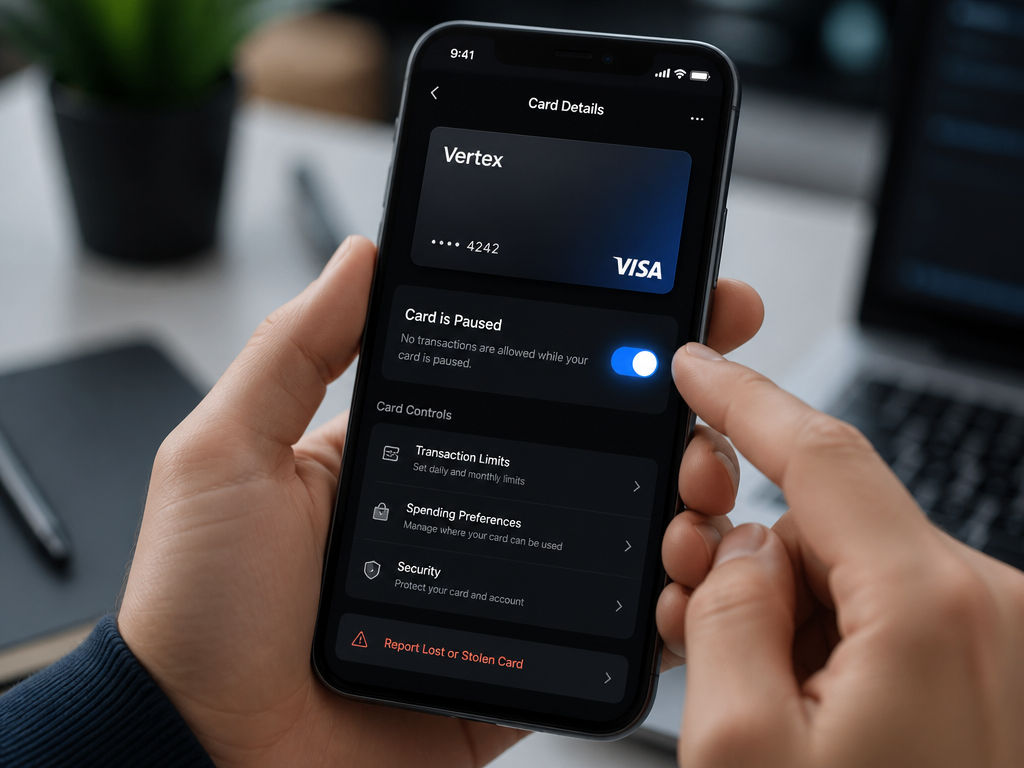
If anything looks wrong, you cancel that one card from your dashboard and the problem stops there.
What makes a virtual card safer
- Spending limit. A charge above the limit can be blocked by the controls you set.
- Merchant restriction. Restrict the card to the intended merchant based on supported controls, so a leaked number is hard to use elsewhere.
- Time window. Keep the card active only when you need it.
- One card per use. A separate card per merchant means one leak is contained, not spread across every payment.
What happens if a number leaks
You cancel the affected card from your dashboard. Future charges on it stop clearing. Your other cards are untouched, so a single bad merchant does not force you to replace the number every other vendor bills.
Habits that keep a virtual card safe
- Use one card per merchant so spend stays separated.
- Set caps that match what you actually expect to spend.
- Check the dashboard so an unexpected charge stands out.
- Cancel cards you no longer use instead of leaving them open.
Are virtual cards safer than physical cards?
For online spend, generally yes. There is nothing physical to lose, and each card can be capped, restricted, and cancelled on its own. See the full virtual card vs physical card comparison.
People also ask
Are virtual cards safe to use online?
What happens if someone steals my virtual card number?
Are virtual cards safer than physical cards?
Can a virtual card be hacked?
Do virtual cards help prevent fraud?
Is it safe to save a virtual card at a store?
Issue a card with these rules on it.
Set the limit, restrict the merchant, choose the active window, and send the card. Every charge lands in one dashboard, already attributed.
Build one in Card StudioNext, on the same problem.
- Basics
The virtual card market: size, growth, and the road to 2029.
Virtual card transaction value is on track to more than triple by 2029. Here is what the data actually says, why the published estimates disagree so sharply, what is fueling the growth, and what it means for a business that pays online.
June 10, 2026 · 6 min read - Basics
How to use a virtual card, online and in store.
A virtual card is a real Visa with a number, an expiration date, and a CVV, just no plastic. Type those details at an online checkout, save it to an account for a subscription, or add it to Apple Wallet or Google Wallet and tap your phone at the register. Refunds come back to the same card, and you can freeze or cancel it from your dashboard whenever you want.
June 17, 2026 · 8 min read - Basics
What happens when a virtual card payment is disputed or flagged as fraud
A charge on the statement looks unfamiliar, or a vendor bills the wrong amount. Here is the general shape of the process: what to check before you assume the worst, how to freeze the card the right way, and what a card network review can and cannot promise once you report it.
July 1, 2026 · 8 min read
The next vendor gets its own Visa card.
Not the shared one. Its own number, its own ceiling, its own line in the ledger.