
Virtual cards for accountants
The hardest part of a client's books is the spend with no receipt and no context. When clients run on virtual cards, the receipt, category, and reviewer are already attached before the charge reaches you.










The slowest part of a close is the charge with no receipt and no context.
Closing a client's books is rarely held up by the math. It is held up by the spend nobody documented.
- One shared statement per client. Every vendor charge, subscription, and staff purchase lands on the same account, and separating them is manual work that grows with the client.
- The receipt arrives weeks late, or never. You are chasing proof of a purchase long after the person who made it has stopped thinking about it.
- Nobody remembers what the charge was for. You wait on a client to explain a transaction from three weeks ago, and the answer is a guess.
- Client books bleed into each other. When a practice runs several clients through one account, a problem on one of them touches all of them.
- Month-end is a reconstruction. You rebuild the month from a bank feed rather than reviewing a record that was already correct.
A card per client. A receipt on every charge. A statement that exports.
Put each client you manage on its own virtual Visa card under one login. The context you usually chase is captured at the moment of spend.
- A card per client, or a set of them. Their spend never mixes with another client's, and you switch between them from one dashboard.
- Receipt and category ride along. Proof attaches to each charge and a note says what it was for, so reconciliation is a review rather than an investigation.
- Category rules sort as charges land. Transactions are sorted automatically by merchant or amount instead of by hand at month-end.
- A cap on every card. A charge above the limit can be blocked based on your controls, so surprises are rare.
- A reviewer can approve before it is booked. You or a manager check a charge against the budget while the details are still fresh, and the client gets an audit trail of who approved what.
- One login across the practice. Manage more than one company with a parent-and-subsidiary structure. It is the same control behind virtual cards for business payments, applied to the books you keep.
Four steps from a new client to a clean statement.
- 01
Make a card.
Name the card for the client or the entity and set the spend limit.
- 02
Set the rules.
Pick the allowed categories where supported, add category rules, and set start and end dates.
- 03
Hand it to the client.
The card is emailed to the cardholder or added to Apple Wallet or Google Wallet.
- 04
Review and export.
Watch charges land with receipts and categories attached, then export a statement for any client and any period straight into the books.
Every client's month, already coded.
Watch each charge land against the client it belongs to, with its receipt and category attached. Issue, freeze, top up, or close any card from the same screen. This works whether the client is a sole proprietor or a growing small business.
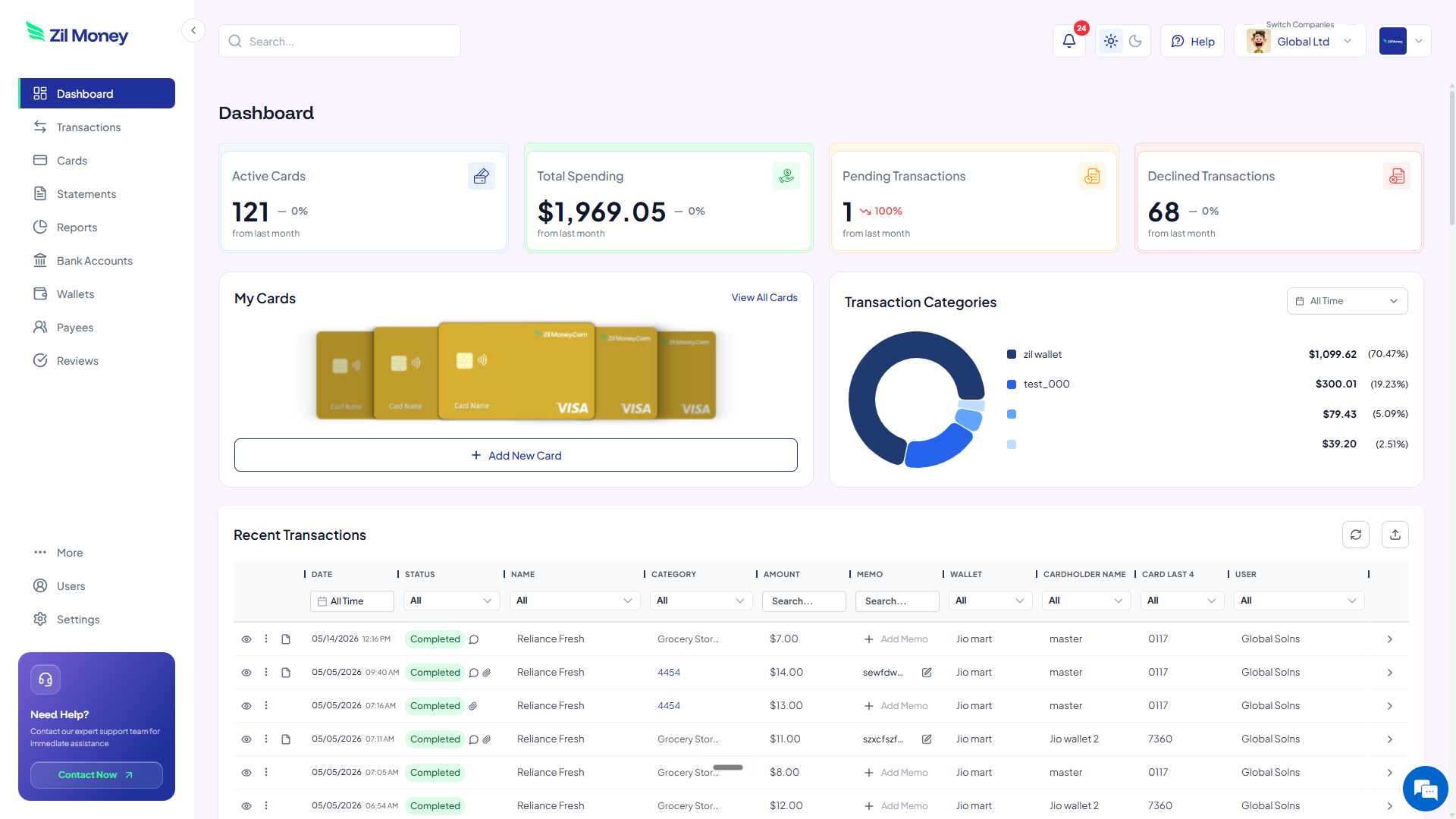
Live dashboard
Active cards, spend by client, declined attempts, every charge as it happens.
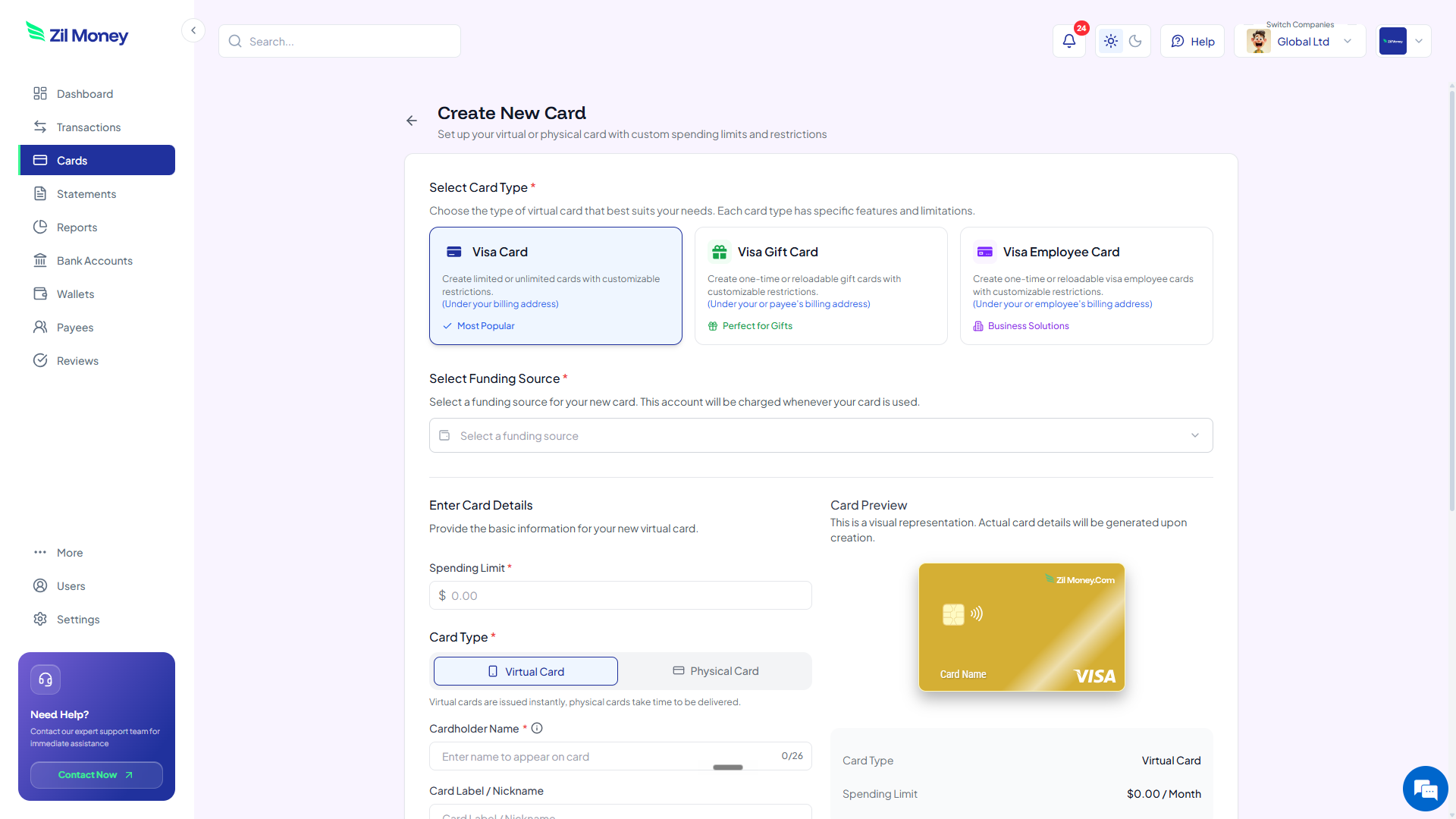
Issue a client card
Pick the card type, set the spend limit, choose virtual or physical, send it to the client.
What you can set on every client card.
ControlWhat you setWhy it matters
Spend limit
Monthly or total capA charge above the cap can be blocked based on your controls.
Store categories
Allowed types, where supportedCard works at the right vendors based on supported controls.
Time window
Start and end datesCard matches the engagement rather than outliving it.
Cardholder name
Client or entity nameCharges roll up as that client’s spend, ready to export.
One-time or reusable
ToggleA single engagement cost or ongoing client spend.
Three ways practices use virtual cards.
- Per-client card / monthly
Give a bookkeeping client a $2,500 monthly card for its vendor and subscription spend. Every charge arrives with a receipt and a category, so the close is a review.
- Contractor pay / per client
Keep a client’s contractor payments on a card of their own, so the year-end totals are easy to pull. For who needs a 1099 and the current reporting threshold, see the IRS guidance on Form 1099-NEC.
- Reviewer workflow / approvals
Set an account manager as reviewer on a client card so spend is approved before it is booked. The month-end conversation becomes a confirmation.
For the documentation standards behind all of this, the IRS guidance on recordkeeping for businesses is the reference to keep handy. Advisory practices holding client funds are covered separately in virtual cards for investment and advisory firms.
Common questions.
Are virtual cards good for accountants and bookkeepers?
Yes. They let a practice keep each client on its own card, capture a receipt and category with every charge, add a reviewer workflow, and export clean statements into the books, all from one login.
How do virtual cards make bookkeeping faster?
They capture the receipt, note, and category at the moment of spend, so the context you usually chase after the fact is already attached. Reconciliation becomes a review instead of a reconstruction.
Can an accountant manage multiple clients with virtual cards?
Yes. You can manage more than one company under one login with a parent-and-subsidiary structure, give each client its own cards, and switch between them from a single dashboard.
Do virtual cards export into accounting tools?
You can export a statement for any client and period, with receipts and categories attached, so the records move into your accounting tool as clean data rather than uncategorized lines.
Can clients approve spend before it is booked?
Yes. A reviewer workflow lets you or a manager approve a charge before it is booked, which checks spend against the budget while the details are fresh and creates a clear audit trail.
How do virtual cards help at tax time?
Each charge carries a receipt and a category, statements export per client and period, and keeping contractor pay on its own card makes year-end 1099 totals easy to pull.
Related setups.
- Industries
Virtual cards for travel agencies: pay suppliers per booking.
Stop fronting cash on one shared agency card and untangling the statement at month-end. Issue a wallet-funded virtual Visa for each booking, capped to the supplier's net rate and l
5 min read - Industries
Virtual cards for startups, wallet-funded from day one.
A newly incorporated startup has no credit history, no way to get a business credit card on merit, and a team that needs to buy tools, pay vendors, and expense travel from day one.
4 min read - Industries
Virtual Cards for Healthcare Practices
Issue department-level virtual cards across your clinic or practice. Set hard spending limits, lock each card to approved vendor categories where supported, and close the gap share
5 min read
Issue the first one this afternoon.
Accountants take about a minute each: pick the type, set the limit, add the restrictions, send it.