
Virtual cards for real estate: one card per property, every dollar tracked.
A contractor who has your business card number can keep charging after the job ends. A contractor who has a virtual card capped to the renovation budget cannot. Virtual cards for real estate give you deal-level budget control at the payment layer, with every charge already coded to the right property address for clean tax records at year-end.










Two flips and a rental run out of one account, and the properties tangle.
Money flows to multiple contractors, suppliers, and vendors across multiple addresses at the same time, and the statement arrives already mixed.
- One card across every active property. A general contractor buys lumber for one project on the same card that paid the staging company for another.
- Per-property records are a requirement, not a preference. IRS Publication 527 requires records sufficient to show income and expenses for each rental property separately, and Schedule E mandates a separate column per property.
- A contractor keeps the number after the job. Give out a physical business card number and they can run charges between jobs, charge incorrect amounts, or keep it after the scope ends.
- The overrun is discovered weeks later. A charge three weeks after the job closed shows up on the monthly statement, not before it happens.
- The spreadsheet stops working at three deals. The gap is not in the spreadsheet; it is at the payment layer, where the money actually leaves your account.
One card per property. One budget. Cancel it on closing day.
Issue a card per property, per flip, or per active listing, each capped to that deal's budget, funded from a company wallet with no credit check.
- Every charge already coded to an address. Renovation charges, supplier payments, and staging invoices land on the property’s own card, so there is no address-level sorting at tax time.
- Capped to the renovation budget. A charge over the cap at online authorization is declined, not discovered weeks later on a statement.
- Locked to approved contractors and suppliers. Restrict the card where supported, so it works for the trades the job actually needs.
- No separate bank account per property. The wallet is funded from your business account and every card draws from it.
- Freeze at inspection, cancel at closing. The deal closes and the card closes with it, before a contractor can run one more charge on a dead job. There is no physical card to recover, because there never was one.
- An export that is the deduction record. The per-property transaction export is ready-made. For ongoing units rather than deals, see virtual cards for property management.
Four steps from acquisition to closing day.
- 01
Make a card at acquisition.
Issue one per property, flip, or active listing, and name it for the address.
- 02
Set the rules.
Set the cap to the deal’s budget and lock it to approved contractors and suppliers where supported.
- 03
Hand it to the trades.
The contractor charges that card and nothing else. Freeze it at inspection if the scope changes.
- 04
Cancel at closing.
Cancel stops future charges; a pending charge already authorized may still settle. Export the card’s history as the property’s expense record.
Every property, already sorted by address.
Watch each charge land against the address it belongs to, with its receipt attached. Issue, freeze, top up, or close any card from the same screen. It is virtual cards for business payments organised by deal.
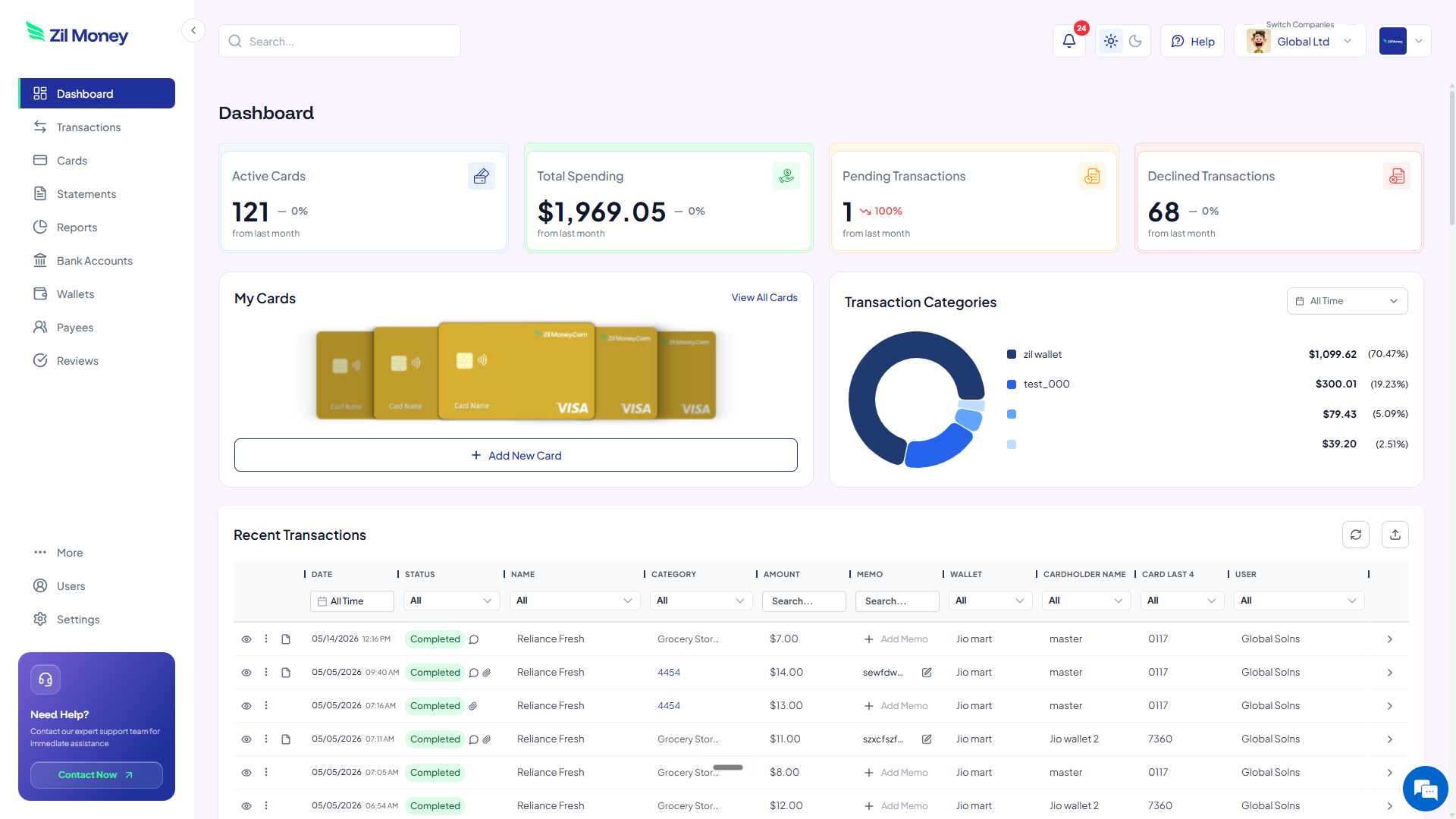
Live dashboard
Active cards, spend by property, declined attempts, every charge as it happens.
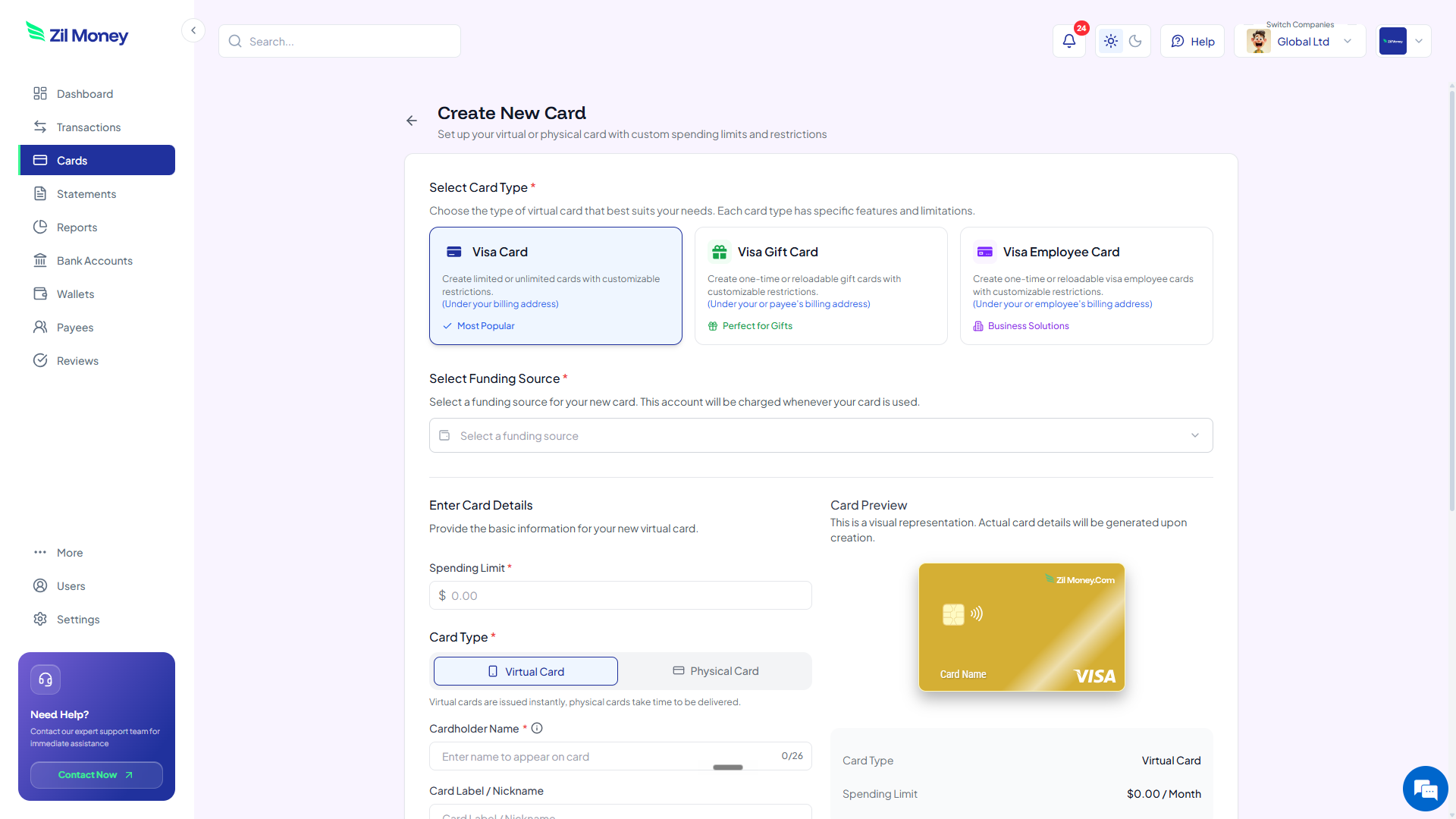
Issue a property card
Pick the card type, set the renovation budget, choose virtual or physical, hand it to the contractor.
What you can set on every property card.
ControlWhat you setWhy it matters
Spend limit
The deal's renovation budgetA charge over the cap is declined at online authorization rather than found on a statement.
Store categories
Approved contractors and suppliers, where supportedThe card works for the trades the job needs, based on supported controls.
Time window
Start and end dates of the scopeThe card matches the job rather than outliving it.
Cardholder name
The property addressEvery charge is coded to the right address for Schedule E.
One-time or reusable
ToggleA single staging invoice or an ongoing renovation.
Three ways investors use virtual cards.
- Flip / per-property budget
Open a card at acquisition capped to the renovation budget. A contractor who hits the cap stops and asks, rather than overrunning quietly.
- Contractor / one job
Give the trade a card issued for that job instead of your business card number. Cancel it the moment work is complete and they cannot charge a dollar more.
- Listing / marketing spend
Run staging, photography, and listing marketing on the property’s own card so the cost sits with the address it was spent on.
Two things worth being clear about. A card cap controls what gets spent, not what gets built — always pair it with a written scope and a payment schedule tied to verified completion milestones, because the card enforces the budget and the contract enforces the work. And this is general information, not tax advice: confirm your reporting requirements with a qualified CPA, and see the IRS guidance on rental real estate recordkeeping.
Common questions.
Can I use a virtual card to track expenses per rental property?
Yes. Issue one virtual card per rental property, cap it to that property's maintenance and repair budget, and every charge is already coded to that address. The IRS requires per-property expense records under Schedule E, and a per-property card provides that at the payment layer.
How do virtual cards help real estate investors at tax time?
Each card's transaction history is a ready-made per-property expense log. Instead of sorting a shared card statement by address at year-end, you export each property's card and the totals drop into that property's Schedule E column. No forensic accounting, no extra CPA hours sorting mixed transactions.
Can I lock a virtual card to specific contractors?
Where supported, you can lock a card to specific merchants or merchant categories, so charges from unapproved vendors are declined. The spend cap is enforced at online authorization. Merchant and category locks are a reliable additional layer where supported, but how a merchant is coded by their bank determines whether the lock fires. Keep the cap as your primary control.
What happens to the card when a property closes or a listing expires?
Cancel the card from your Virtual Card Maker dashboard. Future charges are blocked. Any pending charges that have already authorized may still settle, so allow 3-5 business days for final settlement before closing the books. The card's full transaction history remains available to export for your CPA and tax records.
Is a virtual card better than opening a separate bank account per property?
For deal-level spend tracking and budget control, a virtual card is faster to set up: issued from your existing wallet, named by address, capped to budget, and cancelled at closing. No new accounts to open, no per-property bank account fees, no lingering accounts after closing. If your LLC structure, lender requirements, or compliance obligations call for true fund segregation at the banking layer, a per-entity bank account is the right answer for that purpose. Use the virtual card on top of it for spend control and per-property recordkeeping at the transaction level. Both serve different purposes.
Do virtual cards work for real estate agents tracking client marketing spend?
Yes. Issue one card per active listing, cap it to the staging and marketing budget for that property, and cancel it when the listing closes or expires. Every staging invoice, photography fee, and digital ad spend is already tagged to the right client address with no manual sorting at month-end.
Related setups.
- Industries
Virtual cards for logistics companies, one card per driver.
Petty cash and shared cards are how fuel receipts go missing and mileage claims get inflated. Issue each driver a wallet-funded virtual Visa, cap it to the daily or weekly fuel bud
4 min read - Industries
Virtual cards for IT companies, one card per tool.
IT spend is scattered across dozens of cloud subscriptions, developer tools, and vendor invoices, each billed to whatever card is handy. Issue a dedicated wallet-funded virtual Vis
5 min read - Industries
Virtual cards for import and export businesses, one card per order.
Paying international suppliers by wire means sharing your real bank details with every vendor, on every transaction, with no way to recover if the payment goes wrong. Issue a walle
5 min read
Issue the first one this afternoon.
Real estate take about a minute each: pick the type, set the limit, add the restrictions, send it.