
Virtual cards for construction: per-job and per-crew spend control.
Give every job, foreman, and supplier its own capped virtual Visa card. Material and tool spend maps to the right project, a charge over budget is declined, and a card closes the moment a job does.










Job-site spend slips through the cracks before anyone can code it.
Construction spend is spread across sites, crews, and supply houses, and it moves fast.
- Whatever card is in the truck. A foreman grabs lumber on the way to the site and fuel goes on whichever number is at hand.
- Nobody can say which job a charge belonged to. By the time the invoices land, the one number job costing actually needs is a guess.
- Rentals run past their return date. An extended rental sits inside a shared statement where nothing makes it visible.
- The company account is handed around. Site runs need a card, so the main account number ends up with several people and cannot be taken back.
- Nothing closes at closeout. A job ends and its spend keeps flowing, because no card was ever scoped to the project.
A card per job. A card per foreman. Cancel it at closeout.
Open a virtual Visa card when a job starts and cap it to the budget. Materials, rentals, fuel, and permits all draw from one card, so the charge already knows its project.
- A card per job. Material, rental, and fuel spend maps straight to the project it belongs to, which is exactly what accurate job costing needs. See how to track business spending by job.
- Capped to the estimate. Set the limit to the job budget. An over-order above the cap is declined.
- A capped card per foreman. Site runs happen without handing out the company account. They buy what the job needs, you keep the limit and the audit trail.
- Exposure is one job’s balance. If a number is ever exposed, the exposure is that card’s small balance, and you cancel it from your dashboard.
- Tap at the counter. Use the number at supplier checkout online, or add it to Apple Wallet or Google Wallet to tap where contactless is accepted.
- Cancel at closeout. Close the card when the job ends and future authorizations stop. It is the same logic behind giving every department its own budget, applied to projects.
Four steps from a new job to a closed-out spend record.
- 01
Make a card.
Name the card for the job or the foreman and set the spend limit to the budget.
- 02
Set the rules.
Pick the allowed supplier and fuel categories where supported. Set start and end dates to the job.
- 03
Get it to the crew.
The card is emailed to the foreman or added to Apple Wallet or Google Wallet to tap at the supply house.
- 04
Track and close.
Watch every charge land under that card, then cancel it at closeout. Cancelling stops new charges. Charges already pending still settle and count against the cap.
See what every crew bought and what hit each job.
Watch every charge land, by job and by foreman. Issue, freeze, top up, or close any card from the same screen. If you bill costs back, pair this with tracking billable client expenses.
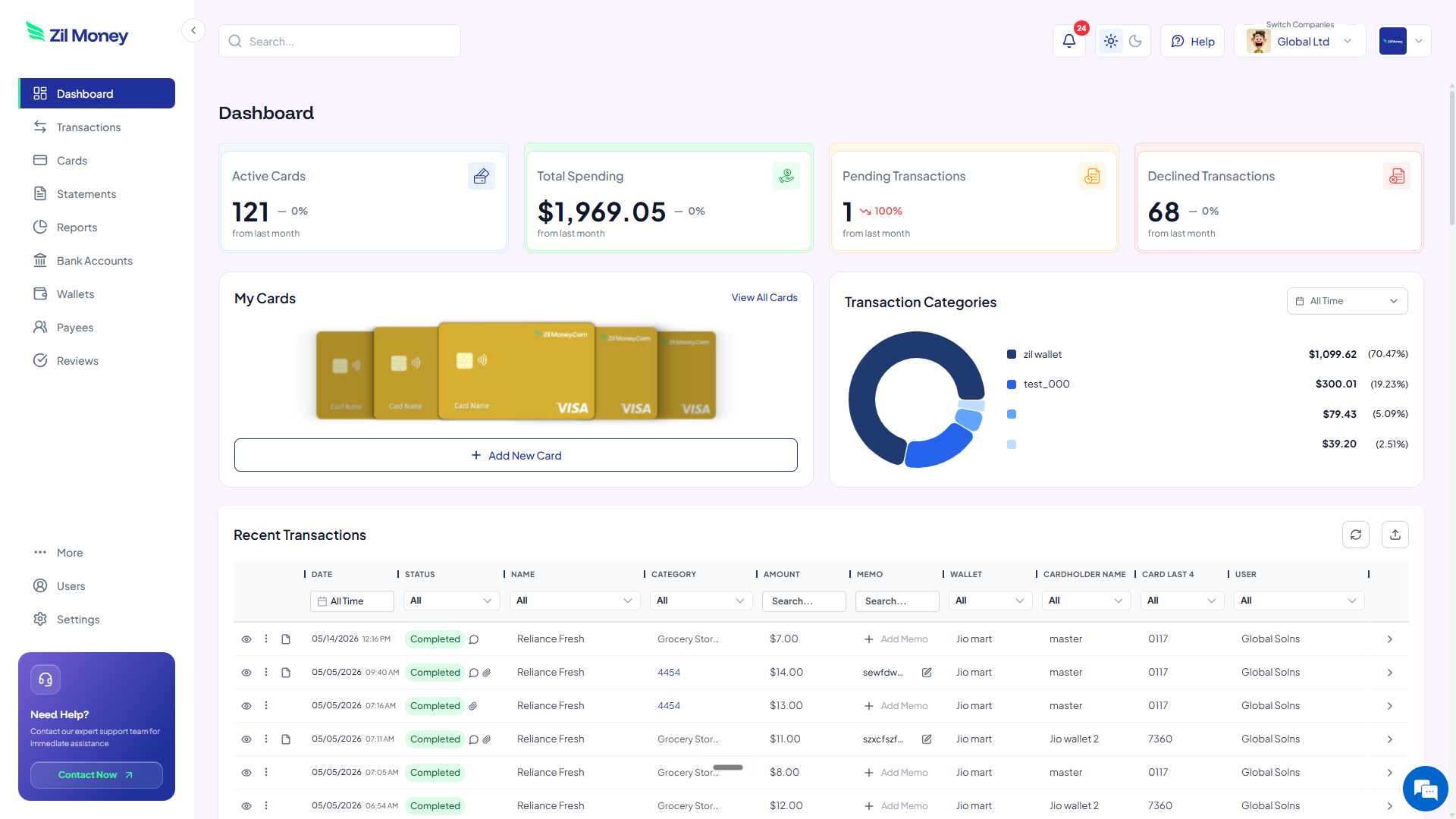
Live dashboard
Active cards, material spend by job and by crew, declined attempts, every charge as it happens.
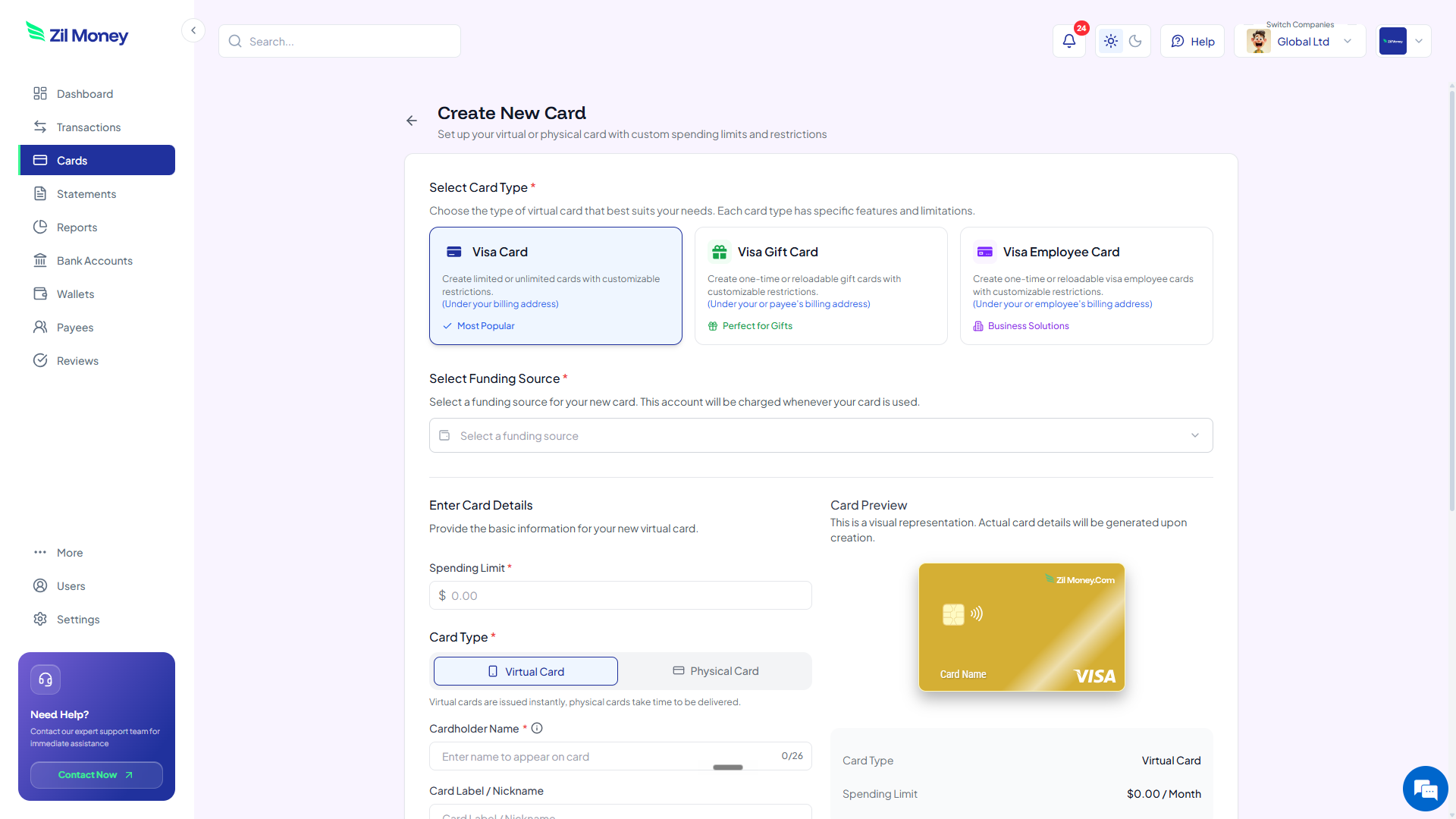
Issue a job card
Pick the card type, set the job budget, choose virtual or physical, get it to the foreman.
What you can set on every job or crew card.
ControlWhat you setWhy it matters
Spend limit
Total or weekly capSet the cap to the job budget. A charge above it is declined.
Store categories
Allowed types, where supportedCard works at supply houses, rental yards, and fuel based on supported controls.
Time window
Start and end dates, where supportedCard matches the length of the job.
Cardholder name
Job or foreman nameCharges roll up as material spend by project and by crew.
One-time or reusable
ToggleA single supply run or an ongoing job.
Three ways builders use virtual cards.
- Per-job card / materials
Open a card for a job and cap it to the material estimate. Supply-house runs, permits, and small tools all draw from it, so the project’s spend is its own clean record.
- Foreman card / weekly
Give a foreman a card capped at $1,500 a week for site runs instead of the company card. If the number is ever exposed, one week’s balance is the exposure.
- Equipment rental / one job
Put a rental on the job’s own card with an end date, so an extended rental is visible rather than buried in a shared statement.
This works for the suppliers that accept cards; supply houses that bill you on a net-30 trade account stay on those terms. Poor cost visibility is expensive at scale — McKinsey’s review of large projects found average cost overruns of roughly 80 percent. Servicing rather than building? See virtual cards for field service businesses.
Common questions.
Can I track construction spend by job with virtual cards?
Yes. Open one virtual card per job and cap it to the budget. Every material, rental, and fuel charge on that card is already tied to the project, which is exactly what job costing needs.
Can I give a foreman a card without sharing the company account?
Yes. Issue a capped virtual card to a foreman for site runs. They can buy what the job needs while you keep the limit and the record, and you can cancel it any time.
What happens to a job card when the project ends?
Cancel it from your dashboard at closeout. Future authorizations on that card stop, and the card's history remains as the project's spend record.
Do virtual cards work at supply houses and rental yards?
They work wherever the supplier accepts Visa, online or, through a phone wallet, in person where contactless is accepted. Supply houses that bill on a net-30 trade account stay on those terms.
Related setups.
- Industries
Virtual Cards for Marketing Teams: Per-Campaign Spend Control
Issue a dedicated virtual card per campaign or ad channel. Set a hard spending cap, lock the card to specific ad platforms where supported, and close any card the moment a campaign
5 min read - Industries
Virtual cards for import and export businesses, one card per order.
Paying international suppliers by wire means sharing your real bank details with every vendor, on every transaction, with no way to recover if the payment goes wrong. Issue a walle
5 min read - Industries
Virtual cards for staffing agencies, one card per placement.
Staffing agencies carry the cost of reimbursing placed workers for job-related expenses, including uniforms, tools, and travel to the client site, while the billing cycle lags by w
4 min read
Issue the first one this afternoon.
Construction take about a minute each: pick the type, set the limit, add the restrictions, send it.