
Virtual cards for staffing agencies, one card per placement.
Staffing agencies carry the cost of reimbursing placed workers for job-related expenses, including uniforms, tools, and travel to the client site, while the billing cycle lags by weeks. Issue each worker a wallet-funded virtual Visa capped to their assignment allowance, label it by client and placement, and the expense is controlled before it happens rather than reconciled after it has already hit the wrong account.










Placed workers need expense money on day one. Client billing clears in sixty.
Staffing agencies carry a funding gap most industries do not, and the traditional tools for bridging it are cash advances and shared cards.
- The agency bridges the gap out of pocket. Uniforms, tools, and travel to the client site are paid weeks before the client pays.
- Cash advances do not reconcile. At the scale of a large placement roster, an advance is a reconciliation problem rather than a control.
- One shared card across several workers. No per-worker accountability, no per-worker cap, and no clean trail for client billing.
- Reimbursement claims arrive after the placement ends. By then the expense is a claim to argue about rather than a decision to approve.
- An early termination leaves the money live. Nothing stops spending on an assignment that ended sooner than planned.
One card per placement, capped to the allowance and labelled for the client.
Fund the agency wallet and issue a virtual Visa for each placement, capped to the assignment allowance and emailed to the worker.
- Assignment cap. Cap each card to the placement allowance. Over-limit charges are declined before they land, so the worker cannot overspend silently.
- Category lock where supported. Restrict the card to relevant expense categories: tools, transport, meals.
- A placement label. Name each card with the worker, client, and placement ID, so client billing is assembled as you spend.
- Funded by the agency, not the worker. The card draws from the agency wallet, so the worker does not need their own bank account or card.
- An approval step, not a claim. If the worker needs more, they call the agency and the agency decides whether to reload the card.
- Cancel on placement end. Cancel the card the moment the assignment ends. The unused balance stays in the wallet, ready for the next placement.
Four steps from a placement to a billable expense record.
- 01
Make a card.
Issue a wallet-funded Visa per worker per assignment and label it with the worker, client, and placement ID.
- 02
Set the rules.
Cap it to the assignment expense allowance and lock it to the relevant categories where supported.
- 03
Send it to the worker.
Email the card so the worker adds it to their mobile wallet and pays for approved assignment expenses.
- 04
Bill and cancel.
Every charge posts under the placement label, so the expense report to the client is already assembled. Cancel the card when the assignment ends.
The card statement is the client billing record.
Watch each charge land against the worker, client, and placement it belongs to. Issue, freeze, top up, or close any card from the same screen. For contract workers paid per project rather than per placement, see virtual cards for contractor payments.
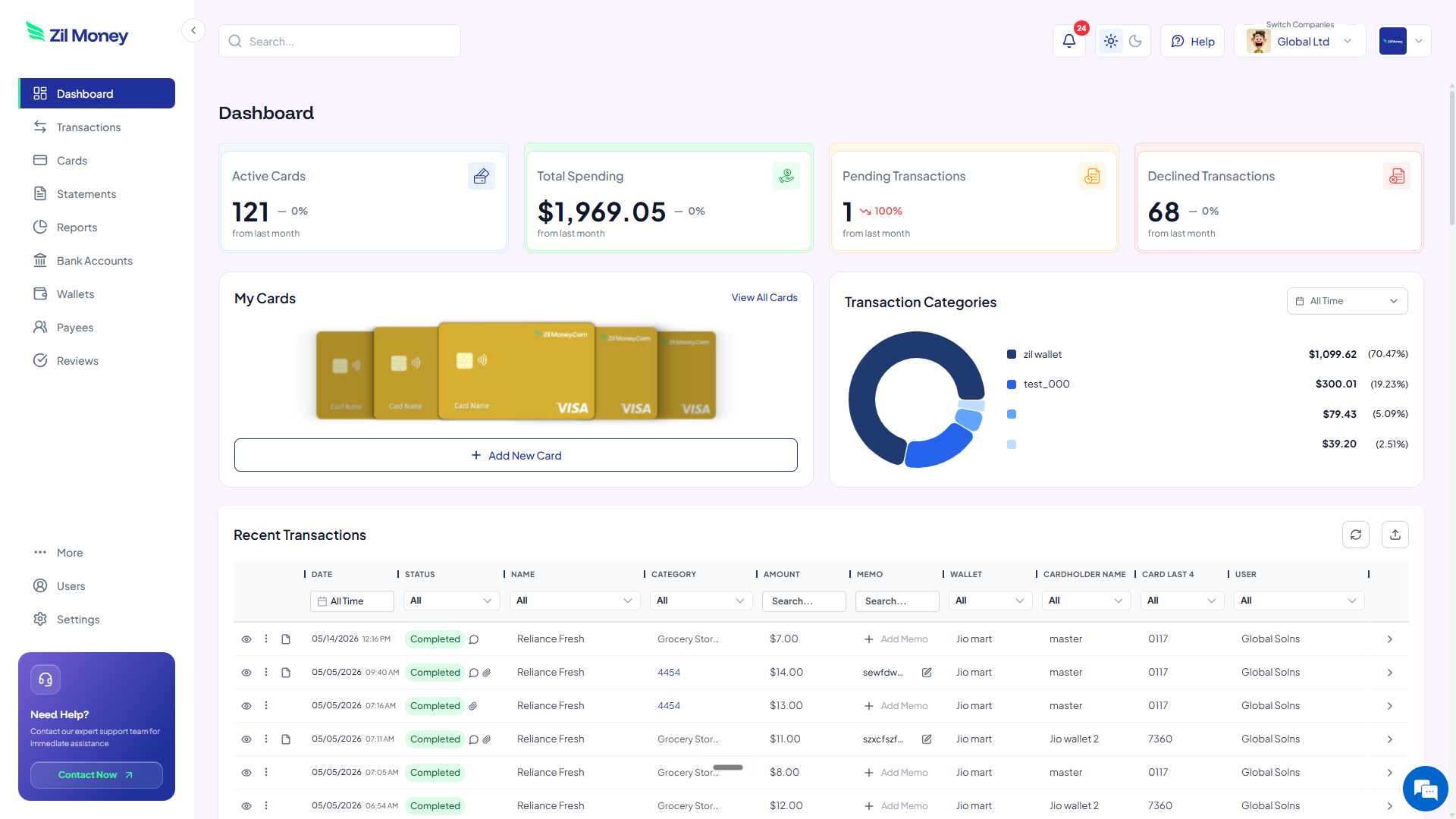
Live dashboard
Active cards, spend by client and placement, declined attempts, every charge as it happens.
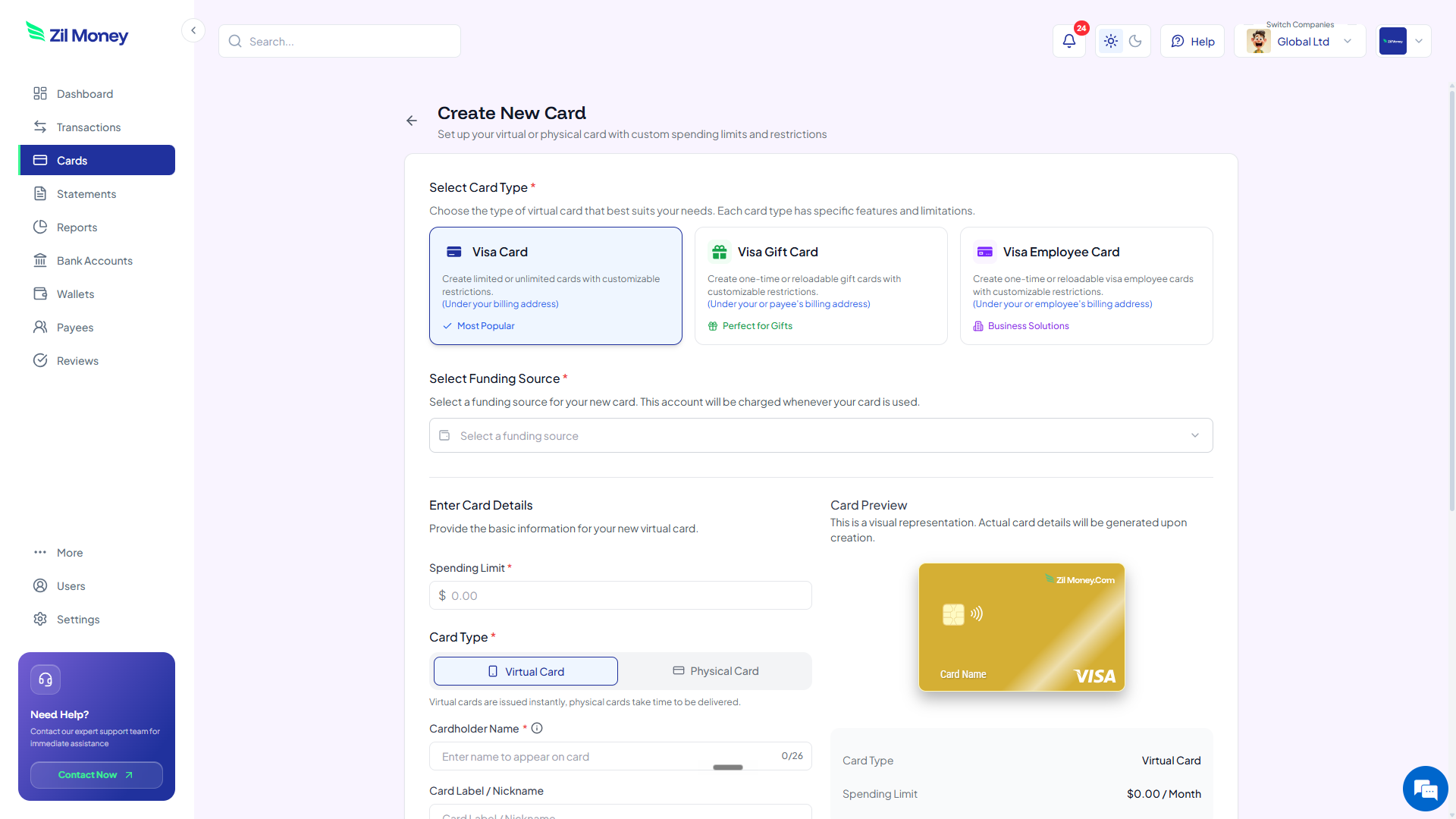
Issue a placement card
Pick the card type, set the assignment allowance, choose virtual or physical, email it to the worker.
What you can set on every placement card.
ControlWhat you setWhy it matters
Spend limit
The assignment allowanceOver-limit charges are declined before they land on the agency.
Store categories
Tools, transport, meals, where supportedAssignment spend is restricted to the categories the placement allows.
Time window
Start and end dates of the assignmentThe card matches the placement rather than outliving it.
Cardholder name
Worker, client, and placement IDCharges roll up per client, ready to back the invoice.
One-time or reusable
ToggleA single kit purchase or an ongoing weekly allowance.
Three ways staffing agencies use virtual cards.
- Per-placement card / one worker
Cap a card to the assignment allowance and label it with the worker and client. All charges for that client’s placements back the invoice with a clean, auditable record.
- Bulk issue / fifty placements at once
Upload a spreadsheet with each worker’s name, client, and placement ID and issue every card in one run. Each still carries its own cap and label.
- Rotating slot / reloadable card
For ongoing client accounts where workers rotate, keep a standing card per placement slot. When one worker leaves, update the label and reload for the next.
Two cautions worth building into the workflow. Do not share one card across several placed workers — that costs you per-worker accountability and the clean trail client billing depends on. And do not forget to cancel the card when a placement ends early; set a reminder at the expected end date and cancel immediately on any early exit.
Common questions.
Can placed workers use the card from day one of their assignment?
Yes. Once you issue the card, the worker can use it. There is no activation wait beyond receiving the card details by email.
What happens to unused balance when a placement ends?
When you cancel the card, the unspent cap stays in your Zil Money wallet. It does not need to be physically recovered the way petty cash does.
Can I track expenses by client or placement?
Yes. Label each card with the client name and placement ID. All charges under that card are automatically tagged to the placement, so billing the client back for reimbursable expenses is straightforward.
Can I issue cards to multiple workers on the same client account?
Yes. Issue one card per worker. All draw from the same wallet, and you see every card's activity in one dashboard.
What if a placed worker overspends?
A charge over the card's cap is declined at authorization. The worker contacts the agency if they need more, which gives the agency an approval step before the overspend happens.
Does the agency need to do a credit check for each worker?
Cards are wallet-funded by the agency rather than issued against the worker's personal credit. Workers do not need their own bank account or financial documentation to receive and use the card.
Related setups.
- Industries
Virtual cards for import and export businesses, one card per order.
Paying international suppliers by wire means sharing your real bank details with every vendor, on every transaction, with no way to recover if the payment goes wrong. Issue a walle
5 min read - Industries
Virtual cards for logistics companies, one card per driver.
Petty cash and shared cards are how fuel receipts go missing and mileage claims get inflated. Issue each driver a wallet-funded virtual Visa, cap it to the daily or weekly fuel bud
4 min read - Industries
Virtual cards for real estate: one card per property, every dollar tracked.
A contractor who has your business card number can keep charging after the job ends. A contractor who has a virtual card capped to the renovation budget cannot. Virtual cards for r
6 min read
Issue the first one this afternoon.
Staffing agencies take about a minute each: pick the type, set the limit, add the restrictions, send it.