
Virtual cards for property management
Maintenance, supplies, and vendors for a dozen units add up fast, and owners want the spend split by property. A card per unit caps each one and keeps records ready for every owner statement.










You spend month-end splitting one statement by property, then defending the split.
Property management is spend on behalf of owners: repairs, supplies, landscaping, turnovers, and a long list of vendors, often across many units at once.
- One company card behind every unit. Run the whole portfolio through it and the charges arrive already mixed together.
- A repair on one unit looks like a repair on another. Nothing on the charge says which address it belongs to, so the split is done from memory.
- Your main number gets read out. A technician or building super needs parts, so the account number leaves your hands and cannot be taken back.
- An estimate quietly becomes an overcharge. With no per-job ceiling, a vendor bills what they bill and you find out afterwards.
- Owner statements are built from a shoebox. Owners want proof of what was spent on their property, and assembling it is a month-end job every month.
A card per property. A cap per unit. An owner statement that matches it.
Create one card per property, or one per unit, and name it for the address. Set a limit that fits the unit’s expected monthly spend.
- Every charge attached to the right property. Spend is split by property from the start, so a repair on one unit cannot be confused with another.
- Capped to what the owner approved. A charge above the unit’s cap can be blocked based on your controls.
- A card for maintenance staff. Issue a capped card scoped to the repair instead of handing out your main number, the same way you would give a remote team member a spending card.
- Vendors paid per property. Landscapers, cleaners, plumbers, and turnover crews are each paid from the card for the property they worked on, so the cost lands in the right place.
- Locked to the intended vendor. Restrict a card based on supported controls, and cancel a single card when a relationship ends without disturbing the rest. Our guide to paying vendors with virtual cards goes deeper.
- Owner-ready records. Each charge carries a receipt, a note, and a category, exported per property for any period.
Four steps from a unit to an owner statement.
- 01
Make a card.
Name the card for the address or the unit and set the limit to its expected monthly spend.
- 02
Set the rules.
Pick the allowed vendor categories where supported and set start and end dates for a turnover or a single job.
- 03
Hand it to maintenance.
The card is emailed to the technician or added to Apple Wallet or Google Wallet to tap at the counter.
- 04
Report and close.
Export a statement for that property and period for the owner, then cancel the card when the job or the tenancy ends.
Every property in one dashboard.
Watch each charge land against the address it belongs to, with its receipt attached. Issue, freeze, top up, or close any card from the same screen. For deal-based spend rather than per-property spend, see virtual cards for real estate.
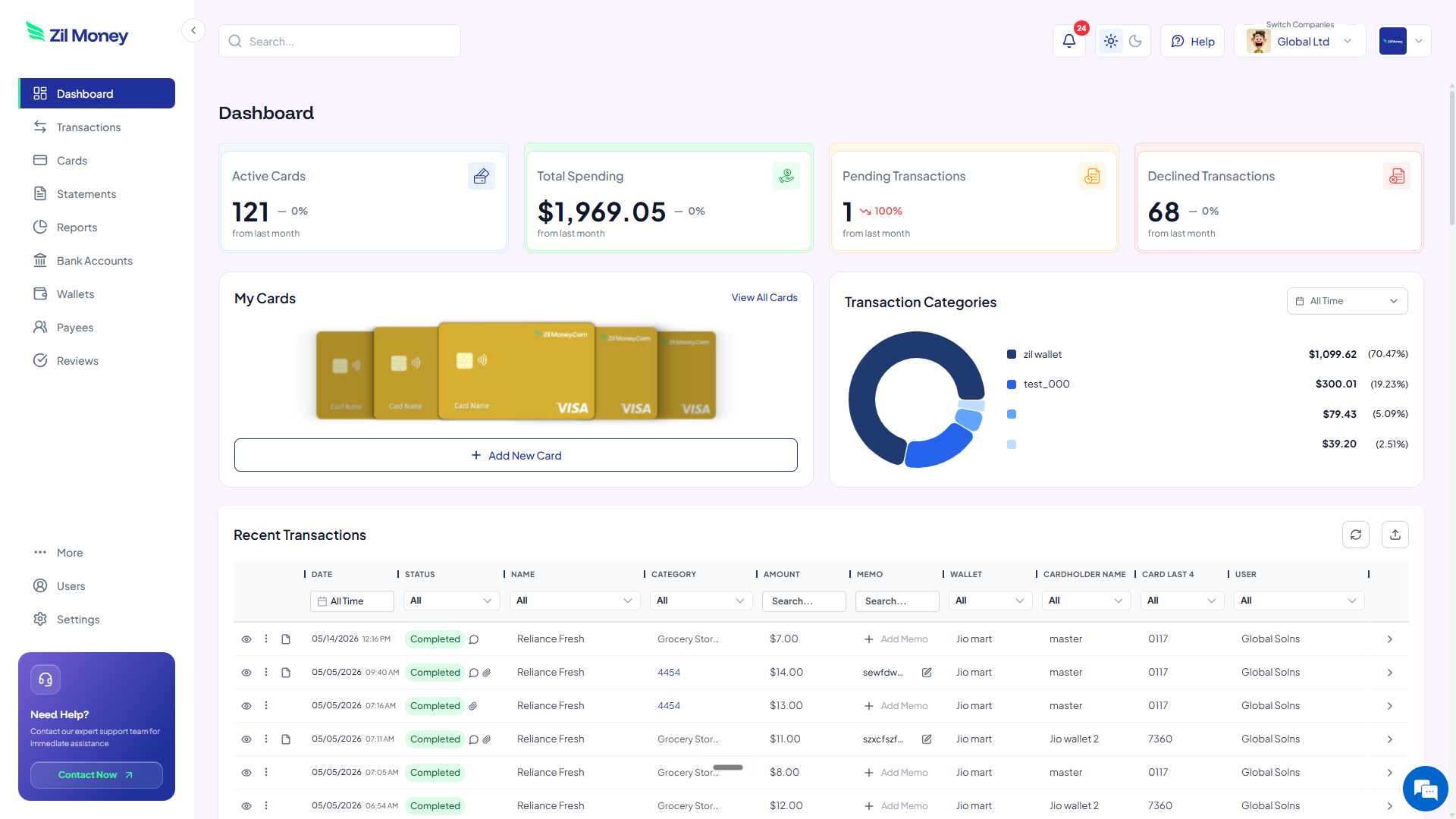
Live dashboard
Active cards, spend by property, declined attempts, every charge as it happens.
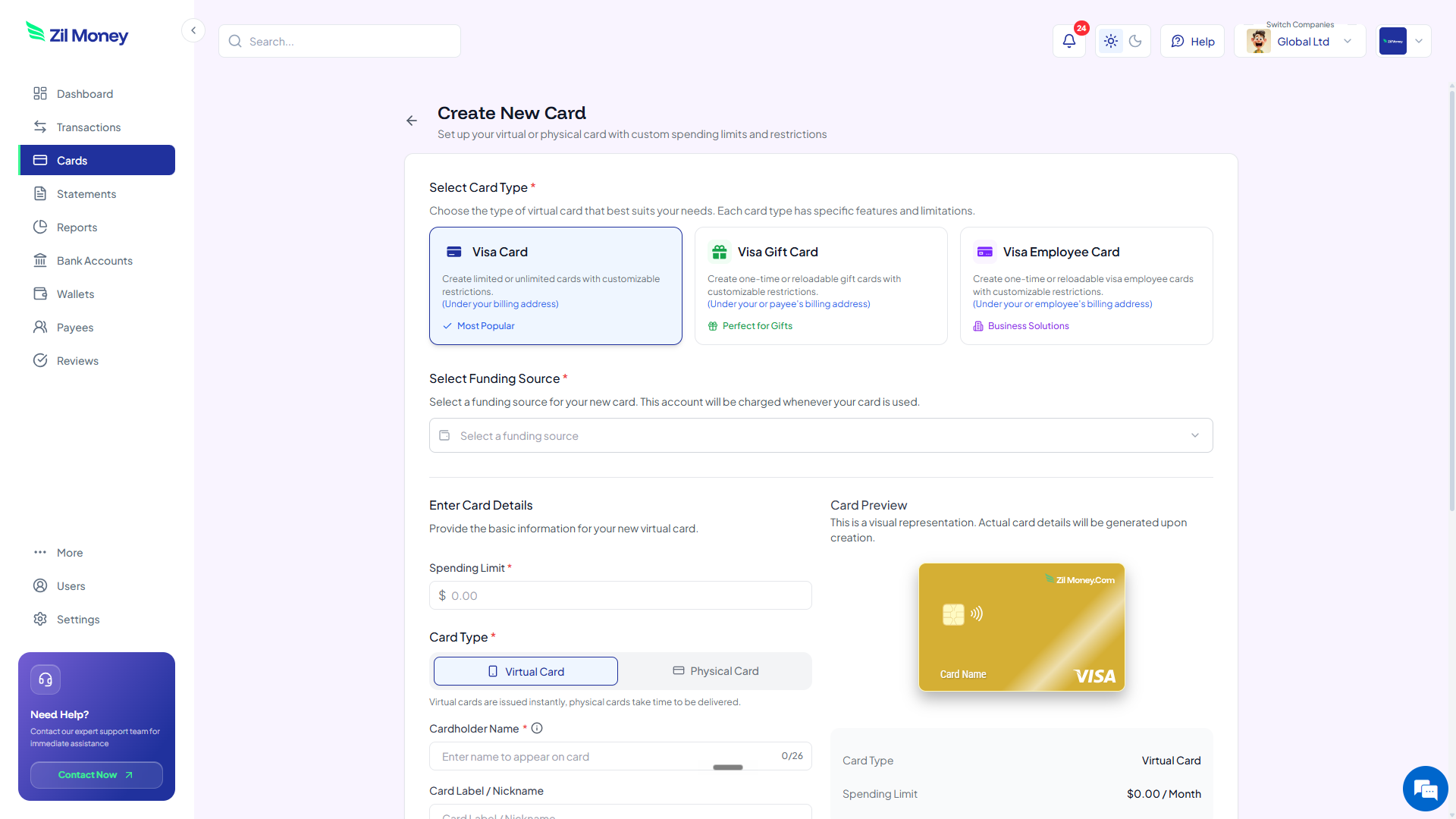
Issue a property card
Pick the card type, set the unit’s limit, choose virtual or physical, get it to the technician.
What you can set on every property card.
ControlWhat you setWhy it matters
Spend limit
Monthly or per-job capA charge above the unit’s cap can be blocked based on your controls.
Store categories
Allowed types, where supportedCard is restricted to the intended vendor based on supported controls.
Time window
Start and end datesCard matches a turnover or a single repair.
Cardholder name
Address or unit nameCharges roll up per property, ready for the owner statement.
One-time or reusable
ToggleA single repair or ongoing upkeep on the unit.
Three ways property managers use virtual cards.
- Per-unit card / monthly
Give each unit a card capped at its expected monthly upkeep. Supplies, small repairs, and landscaping all draw from it, so the owner statement matches the card line for line.
- Maintenance tech / per repair
Issue a card scoped to one repair with a limit set to the estimate, so an estimate cannot quietly become an overcharge. Your main account stays private.
- Turnover crew / fixed window
Open a card for a unit turnover with an end date. Cleaners, painters, and the carpet vendor all bill against it, and the card stops when the unit is re-let.
As a portfolio grows you add units, buildings, and sometimes separate ownership entities. Create as many cards as you need under one login, and manage more than one entity with a parent-and-subsidiary structure. Rental real estate has its own recordkeeping expectations — see the IRS guidance on rental real estate income, deductions and recordkeeping.
Common questions.
Are virtual cards good for property management?
Yes. They let a property manager put a capped card on each property or unit, give maintenance staff a card without sharing the main account, and produce owner statements from records that build as you spend.
How do property managers track spend per unit?
Create one card per property or unit and name it for the address. Every charge is attached to that card, so spend is split by property from the start and owner statements are easy to produce.
Can I give a maintenance technician a card?
Yes. Issue a capped card scoped to a repair or a unit. The technician spends at most merchants where Visa is accepted online, and in person through a mobile wallet where available, subject to merchant support and network conditions, while your main account stays private and every charge shows in your dashboard.
How do virtual cards help with owner statements?
Each charge carries a receipt, a note, and a category, and you export a statement for any property and period. The owner statement matches the card line for line, which makes it easy to defend.
Can I cap spend on a single property?
Yes. Set a limit on each property's card, and a charge above the cap can be blocked based on your controls, so repairs and supplies stay inside what the owner approved.
Where can a property management virtual card be used?
It works at most merchants where Visa is accepted online, and in person through a mobile wallet where available, subject to merchant support and network conditions, which covers the supplies, parts, and vendor payments most property maintenance runs on.
Related setups.
- Industries
Virtual cards for real estate: one card per property, every dollar tracked.
A contractor who has your business card number can keep charging after the job ends. A contractor who has a virtual card capped to the renovation budget cannot. Virtual cards for r
6 min read - Industries
Virtual cards for medical and dental practices
A virtual card for a medical or dental practice is a prepaid Visa card scoped to one provider, operatory, or location, with a monthly cap and vendor locks. Cap monthly supply and l
4 min read - Industries
Virtual cards for accountants
The hardest part of a client's books is the spend with no receipt and no context. When clients run on virtual cards, the receipt, category, and reviewer are already attached before
5 min read
Issue the first one this afternoon.
Property management take about a minute each: pick the type, set the limit, add the restrictions, send it.