
Virtual cards for startups, wallet-funded from day one.
A newly incorporated startup has no credit history, no way to get a business credit card on merit, and a team that needs to buy tools, pay vendors, and expense travel from day one. Issue wallet-funded virtual Visas from your company wallet, no personal guarantee, no waiting. Each card carries a cap and a label so every spend decision is visible before month-end.










Startup spending happens before company credit history exists.
Cloud infrastructure, design tools, dev environments, communication software — the tools a team needs on day one all want a card.
- No credit history, no business card on merit. A newly incorporated company cannot get one, and the team needs to buy from day one.
- The founder’s personal card becomes the rail. Most reach for it with a plan to sort it out later, and later compounds.
- Personal and business spend get mixed. That creates accounting problems, complicates tax filing, and makes fundraising due diligence harder.
- You cannot revoke a vendor without touching personal accounts. Cancelling the number to cut off one tool affects everything else on it.
- One shared card has no per-person view. Everyone expenses to the same number because it is easier, and nobody can see who spent what without reading every line.
Wallet-funded cards from day one. No personal guarantee, no waiting.
Fund a company wallet and issue virtual Visas from that balance, so every company expense stays on the company’s side.
- Per-person cap. Cap each card to the individual’s budget. A charge over the cap is declined at authorization.
- A real-time decline instead of a monthly surprise. The team member sees the decline and asks for a budget increase before buying, rather than filing an expense report after the money has left.
- Merchant lock where supported. Lock a card to a merchant or category for tighter control on a specific tool or vendor.
- A label per person and purpose. Name each card so every charge is traceable without an expense-report process layered on top.
- Drawn from the company wallet. No minimum operating history, no personal credit, no personal guarantee.
- Cancel the moment someone leaves. Cancel a team member’s card when they go or when the budget is spent, and nothing else is affected.
Four steps from incorporation to a controlled expense rail.
- 01
Fund the wallet.
The wallet is the budget; the cards are how it reaches the people and tools that need it.
- 02
Issue a capped card.
Create a card per team member, or per tool, and name it for the person and purpose.
- 03
Set the rules.
Set the cap to the budget and add a merchant or category lock where supported.
- 04
Reconcile by label.
Charges post under the card label in real time, so spend is visible without waiting for a month-end statement.
Every spend decision visible before month-end.
Watch each charge post under the person or tool it belongs to. Issue, freeze, top up, or close any card from the same screen. For company-wide budgets as the team grows, see virtual cards for departments.
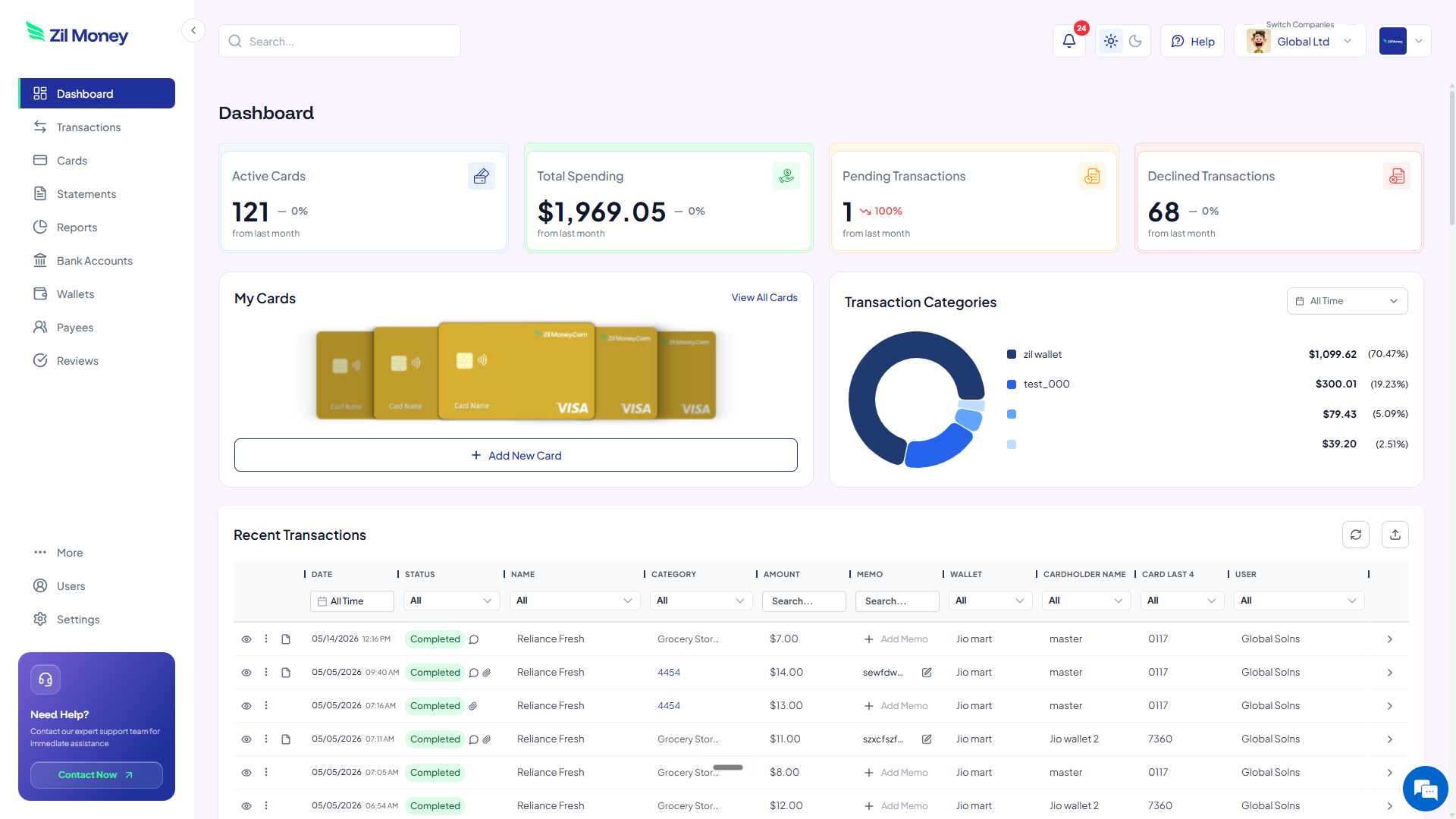
Live dashboard
Active cards, spend by person and by tool, declined attempts, every charge as it happens.
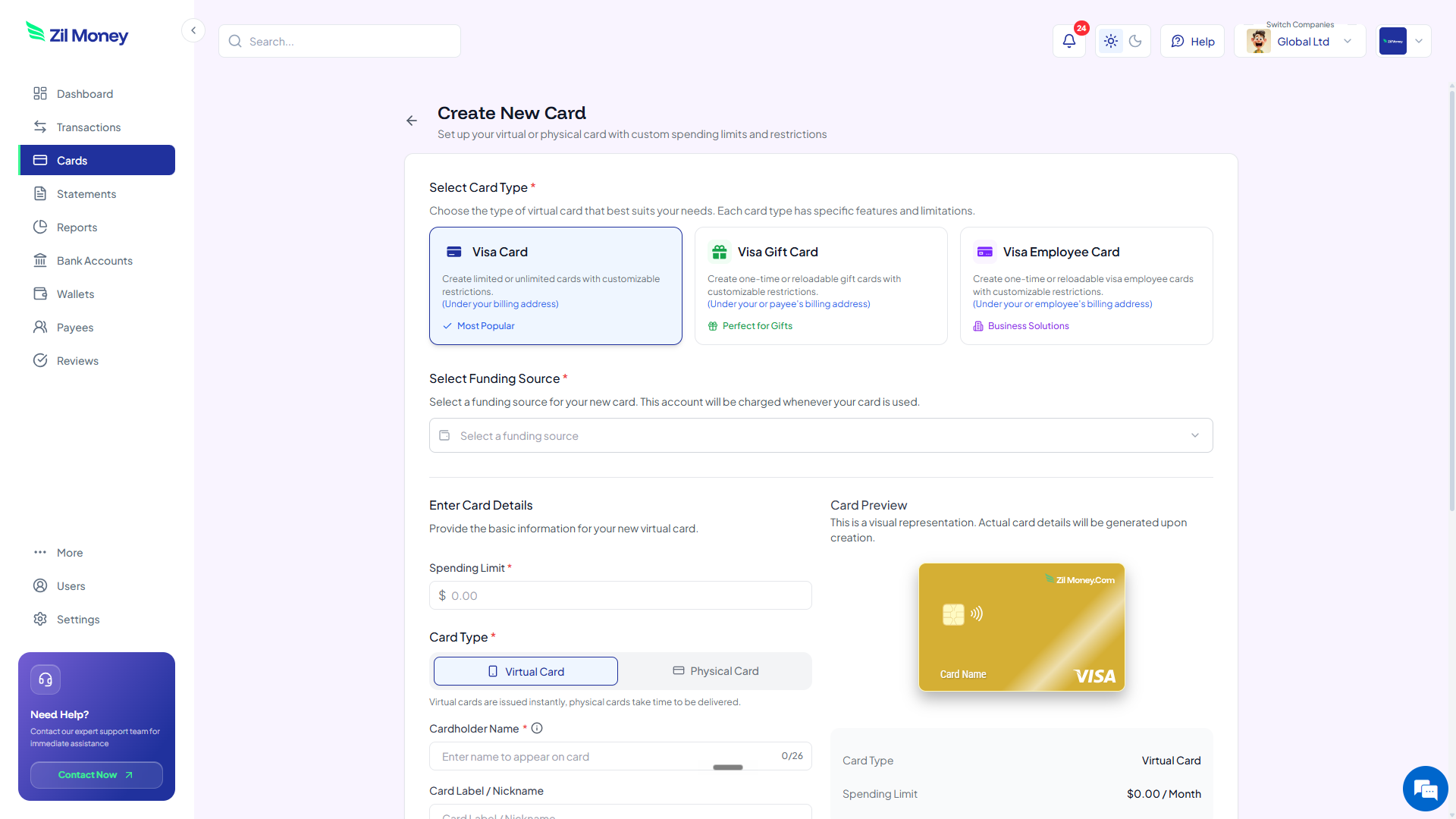
Issue a team card
Pick the card type, set the person’s budget, choose virtual or physical, send it to them.
What you can set on every startup card.
ControlWhat you setWhy it matters
Spend limit
The individual's or tool's budgetOver-limit charges are declined, which prompts a request rather than an overspend.
Store categories
Merchant or category lock, where supportedA card can be tied to one vendor for tighter control.
Time window
Start and end datesA card for a trial or a contractor stops on its own.
Cardholder name
Person and purposeEvery charge is traceable to who bought it and what for.
One-time or reusable
ToggleA single purchase or an ongoing subscription.
Three ways founders use virtual cards.
- A card per person
Each team member gets their own cap and their own visibility, automatically, with no expense-report process layered on top.
- A card per tool
For subscriptions, give each tool its own card so the label on the charge says what it was for, not just who bought it.
- Hire, issue, cancel
When you hire, issue a card. When someone leaves, cancel it. When a subscription changes, reload or cancel. No shared number to rotate.
Two cautions worth building into the workflow. Do not run a startup on a founder’s personal card — mixing personal and business spend creates accounting problems and means you cannot cancel a vendor’s access without affecting personal accounts. And do not cancel a card while a charge is pending; a pending authorization can still settle and count against the cap. The program you build on day one is the same one that runs at fifty employees, with department-level caps, approvals, and bulk issuance from a spreadsheet.
Common questions.
Does my startup need a credit history to issue virtual cards?
Virtual cards are wallet-funded. You fund the Zil Money wallet from your business account and issue cards from that balance, rather than relying on a credit line. There is no personal guarantee on the card.
How many cards can I issue?
You can issue cards to every team member, one per person or one per expense purpose. There is no minimum company size.
Can I increase a team member's limit as the startup grows?
Yes. Reload the card or issue a new one with a higher cap. You control the limit from the dashboard and can change it at any time.
What happens if a team member leaves?
Cancel their card immediately from the dashboard. Cancelling stops new charges. Any pending authorization at the time of cancellation can still settle.
Can I use this for SaaS tools the company subscribes to?
Yes. Issue a separate card for each SaaS subscription, cap it to the monthly or annual charge, and lock it to the vendor's merchant where supported.
Does this work for startups in India paying for global tools?
Yes. The virtual cards are Visa and accepted globally. You fund the Zil Money wallet and issue Visa cards regardless of where your team or vendors are located.
Related setups.
- Industries
Virtual cards for staffing agencies, one card per placement.
Staffing agencies carry the cost of reimbursing placed workers for job-related expenses, including uniforms, tools, and travel to the client site, while the billing cycle lags by w
4 min read - Industries
Virtual cards for logistics companies, one card per driver.
Petty cash and shared cards are how fuel receipts go missing and mileage claims get inflated. Issue each driver a wallet-funded virtual Visa, cap it to the daily or weekly fuel bud
4 min read - Industries
Virtual cards for real estate: one card per property, every dollar tracked.
A contractor who has your business card number can keep charging after the job ends. A contractor who has a virtual card capped to the renovation budget cannot. Virtual cards for r
6 min read
Issue the first one this afternoon.
Startups take about a minute each: pick the type, set the limit, add the restrictions, send it.