
Virtual cards for logistics companies, one card per driver.
Petty cash and shared cards are how fuel receipts go missing and mileage claims get inflated. Issue each driver a wallet-funded virtual Visa, cap it to the daily or weekly fuel budget, lock it to fuel merchants, and every route expense reconciles itself. The driver spends what the job needs. Nothing more.










Petty cash and shared cards are how fuel receipts go missing.
The float goes out, receipts come back in pieces, and the reconciliation at month-end is a guessing game.
- Cash is anonymous. Once the float is handed out there is no spend control at all, and no way to tell who spent it on what.
- Paper receipts get lost. The record of a route’s expenses depends on a driver keeping slips intact across a shift.
- Mileage claims get inflated. A reimbursement claim arriving weeks later cannot be checked against anything.
- One shared card, several drivers. No per-driver accountability, and no way to see which route consumed which expense.
- Month-end is spreadsheet archaeology. Answering “how much did Route 12 spend last week?” means rebuilding it by hand.
A card per driver, capped to the shift and locked to fuel.
Issue each driver a wallet-funded virtual Visa, emailed to them to add to their mobile wallet, with a hard limit that matches the job’s expected expense.
- Daily or weekly cap. Set the cap to the expected fuel budget for the shift or route. Over-limit charges are declined at authorization.
- Fuel-category lock. Restrict the card to fuel or transport merchant categories where supported, so a non-route stop is declined.
- A label per driver and route. Name each card with the driver and route so every charge maps back to the right job.
- Receipt on each charge. Attach the fuel receipt to the charge, so the card history is the route’s expense record.
- An accountability loop cash cannot create. The driver cannot overspend silently. You see the decline, and the driver contacts dispatch if the job needs more.
- Instant cancel. Cancel a driver card the moment a shift ends or a driver leaves. Vendor payments for fuel suppliers, maintenance contractors, and toll operators draw from the same wallet.
Four steps from dispatch to a reconciled route.
- 01
Make a card.
Issue a wallet-funded Visa per driver, per route, or per vehicle, and label it with the driver and route.
- 02
Set the rules.
Cap it to the expected route expense and lock it to fuel or transport categories where supported.
- 03
Send it to the driver.
Email the card or share the details so the driver adds it to their phone’s mobile wallet and pays at the pump or the toll.
- 04
Reconcile and cancel.
Every charge posts under the card label, so the shift’s history is the route’s expense record. Cancel the card when the shift ends.
Read the route’s spend off the card, not off a spreadsheet.
Watch each charge land against the driver and route it belongs to. Issue, freeze, top up, or close any card from the same screen. Owner-operators and small fleets run the same setup at a smaller scale: see virtual cards for trucking.
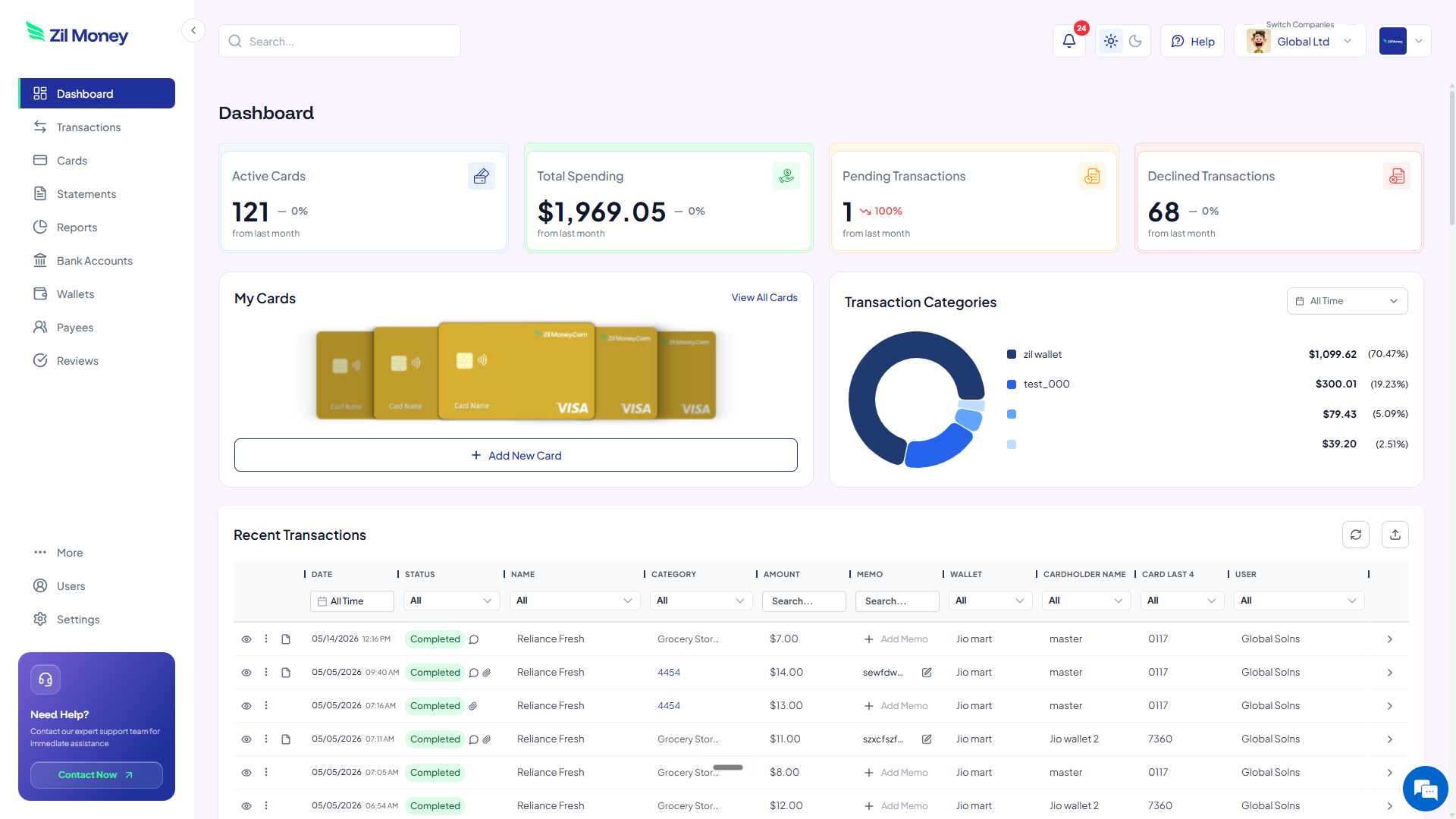
Live dashboard
Active cards, spend by driver and route, declined attempts, every charge as it happens.
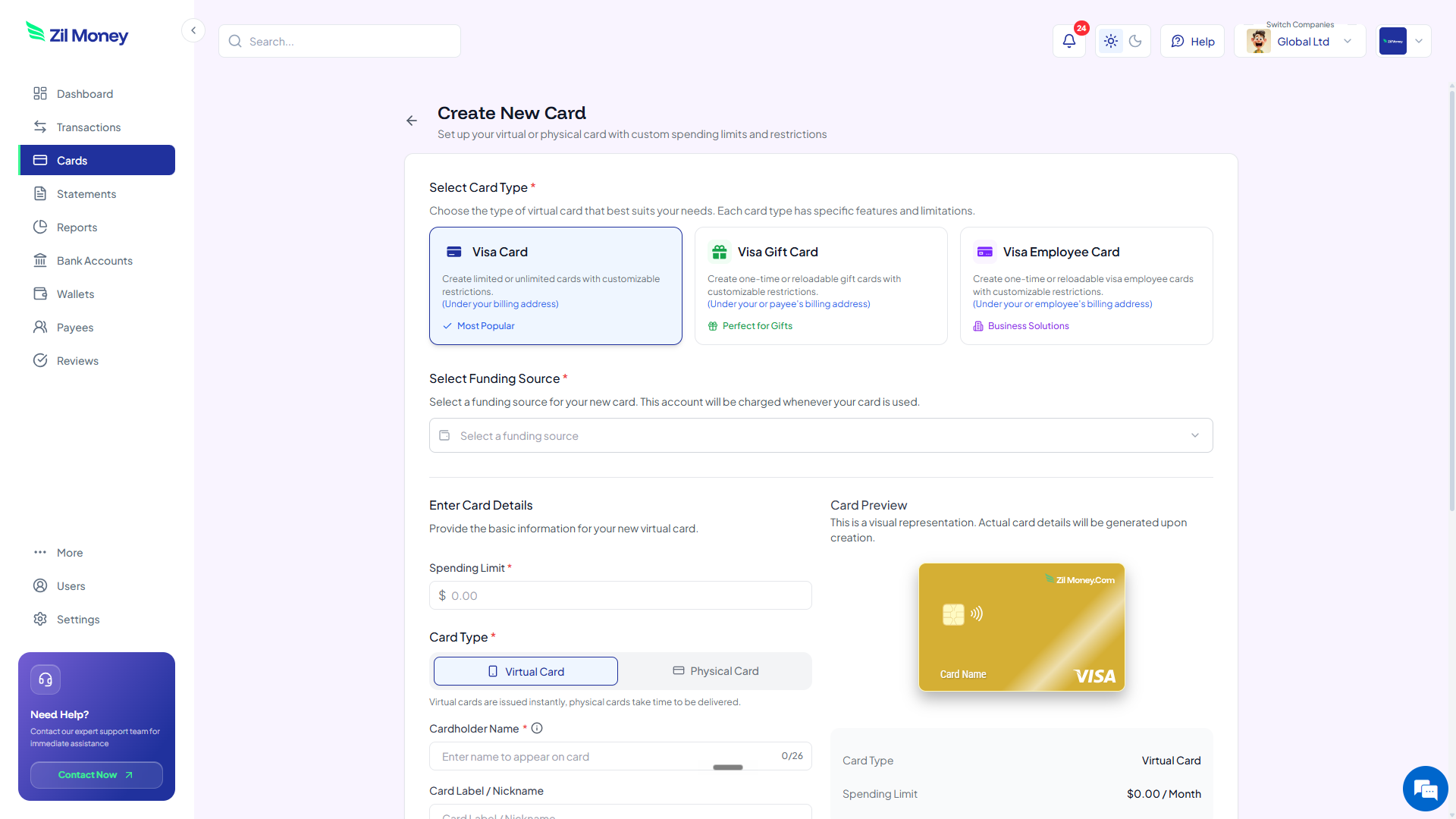
Issue a driver card
Pick the card type, set the shift’s fuel budget, choose virtual or physical, email it to the driver.
What you can set on every driver card.
ControlWhat you setWhy it matters
Spend limit
Daily or per-route capA charge above the fuel budget is declined at authorization.
Store categories
Fuel or transport categories, where supportedA stop at a non-route merchant is declined based on supported controls.
Time window
Start and end datesThe card matches the shift rather than outliving it.
Cardholder name
Driver and routeEvery charge maps back to the right job.
One-time or reusable
ToggleA single depot supply run or a standing weekly route.
Three ways logistics operators use virtual cards.
- Driver card / daily fuel
Cap a driver card to the shift’s expected fuel budget and lock it to fuel categories. If the job needs more, the driver calls dispatch and you decide whether to reload.
- Alongside a fleet card
You do not have to replace an existing fleet card program. Use virtual cards for what falls outside it: maintenance vendors off-network, one-off equipment rentals, depot supply runs.
- Non-fuel route expenses
Issue a second card per driver for tolls and incidentals, drawn from the same wallet and posting to the same dashboard as the fuel card.
Two cautions worth building into the workflow. The fuel-category lock depends on how the merchant’s acquirer codes the transaction, and some fuel stations also sell convenience items under a different category — the spend cap is the primary control, the lock is a backup. And do not cancel a driver card while a pump authorization is pending; check the dashboard for pending activity before cancelling at the end of a shift. For freight that crosses a border, see virtual cards for import and export businesses.
Common questions.
Can drivers use virtual cards at fuel pumps?
Yes. The virtual card is a Visa and works at any merchant that accepts Visa, including fuel pumps that allow card-not-present or mobile payments. For pay-at-the-pump, the driver can use their phone's mobile wallet.
What if a driver needs more fuel than the cap allows?
The charge over the cap is declined. The driver contacts the dispatcher, who can reload the card or issue a new one from the dashboard.
Can I issue cards to all drivers at once?
Yes. Upload a spreadsheet with each driver's name and route, and issue cards for all of them in one run.
How do I handle toll payments?
Issue a separate card for toll accounts or add tolls to the driver's card with a cap that covers both fuel and expected tolls for the route.
What happens when a driver leaves the company?
Cancel their card immediately from the dashboard. Cancelling stops all future charges. Any pending authorization at the time of cancellation can still settle.
Is there a credit check to issue driver cards?
Cards are wallet-funded: you fund your Zil Money wallet and draw from it to issue cards, rather than opening a credit line, with no personal guarantee.
Related setups.
- Industries
Virtual cards for IT companies, one card per tool.
IT spend is scattered across dozens of cloud subscriptions, developer tools, and vendor invoices, each billed to whatever card is handy. Issue a dedicated wallet-funded virtual Vis
5 min read - Industries
Virtual cards for staffing agencies, one card per placement.
Staffing agencies carry the cost of reimbursing placed workers for job-related expenses, including uniforms, tools, and travel to the client site, while the billing cycle lags by w
4 min read - Industries
Virtual cards for real estate: one card per property, every dollar tracked.
A contractor who has your business card number can keep charging after the job ends. A contractor who has a virtual card capped to the renovation budget cannot. Virtual cards for r
6 min read
Issue the first one this afternoon.
Logistics companies take about a minute each: pick the type, set the limit, add the restrictions, send it.