
Virtual cards for e-commerce
Online sellers pay a lot of suppliers and a lot of ad platforms, often new ones each month. A virtual card gives each its own capped number, protects your main account, and keeps cost of goods clean.










Every supplier holds the same store card, so every supplier is a risk.
An online store pays a moving list of suppliers and ad platforms, and tries new ones constantly.
- One number, handed out everywhere. Put it all on one store card and every supplier holds the same digits.
- One breach takes the whole store down. A breached supplier, a runaway ad account, or a single overcharge puts your cash flow at risk.
- Reissuing means telling everyone. Cancel the shared number and every supplier, platform, and subscription on it is cut off at the same moment.
- A new supplier is an unknown. Testing suppliers is how you find better margins, but a first order behind your main number is a leap.
- Margins are hidden in one statement. Cost of goods and ad spend share a single account, so what a product line costs to source and promote is hard to see.
A separate capped number for each supplier and each ad account.
Give each supplier its own card. The number they hold only works for them, and only up to the limit you set.
- One supplier per card. If that supplier is breached, disputes a refund, or starts overcharging, you cancel the single card and every other supplier keeps working.
- Supplier orders capped near the order. Set the card close to the amount you expect, so a charge above your cap can be blocked based on your controls.
- Ad accounts capped at their budget. A runaway campaign cannot drain the account. Our ad spend guide covers this in detail.
- Apps and tools on their own cards. The store platform, apps, and subscriptions each get a capped card of their own.
- Trial orders behind a tight limit. Place a first order on a card you fully control, see how the supplier performs, and raise the limit only once you trust them.
- Margins that reconcile themselves. Each charge carries a receipt and a category, so cost of goods and ad spend are easy to see and export. New to the format? Start with what a virtual card is.
Four steps from a new supplier to a capped order.
- 01
Make a card.
Name the card for the supplier or the ad account and set the spend limit near the order or the budget.
- 02
Set the rules.
Pick the allowed categories where supported and set start and end dates.
- 03
Pay at checkout.
Use the number at the supplier’s online checkout, or add it to Apple Wallet or Google Wallet to pay in person where available.
- 04
Track and cancel.
Watch the charge land with its receipt in your dashboard. Cancel the card if the supplier goes wrong, and nothing else is affected.
Cost of goods and ad spend, separated at the source.
Watch each charge land against the supplier or platform it belongs to, with a receipt attached. Issue, freeze, top up, or close any card from the same screen. Selling across several marketplaces is a different problem: see virtual cards for online sellers.
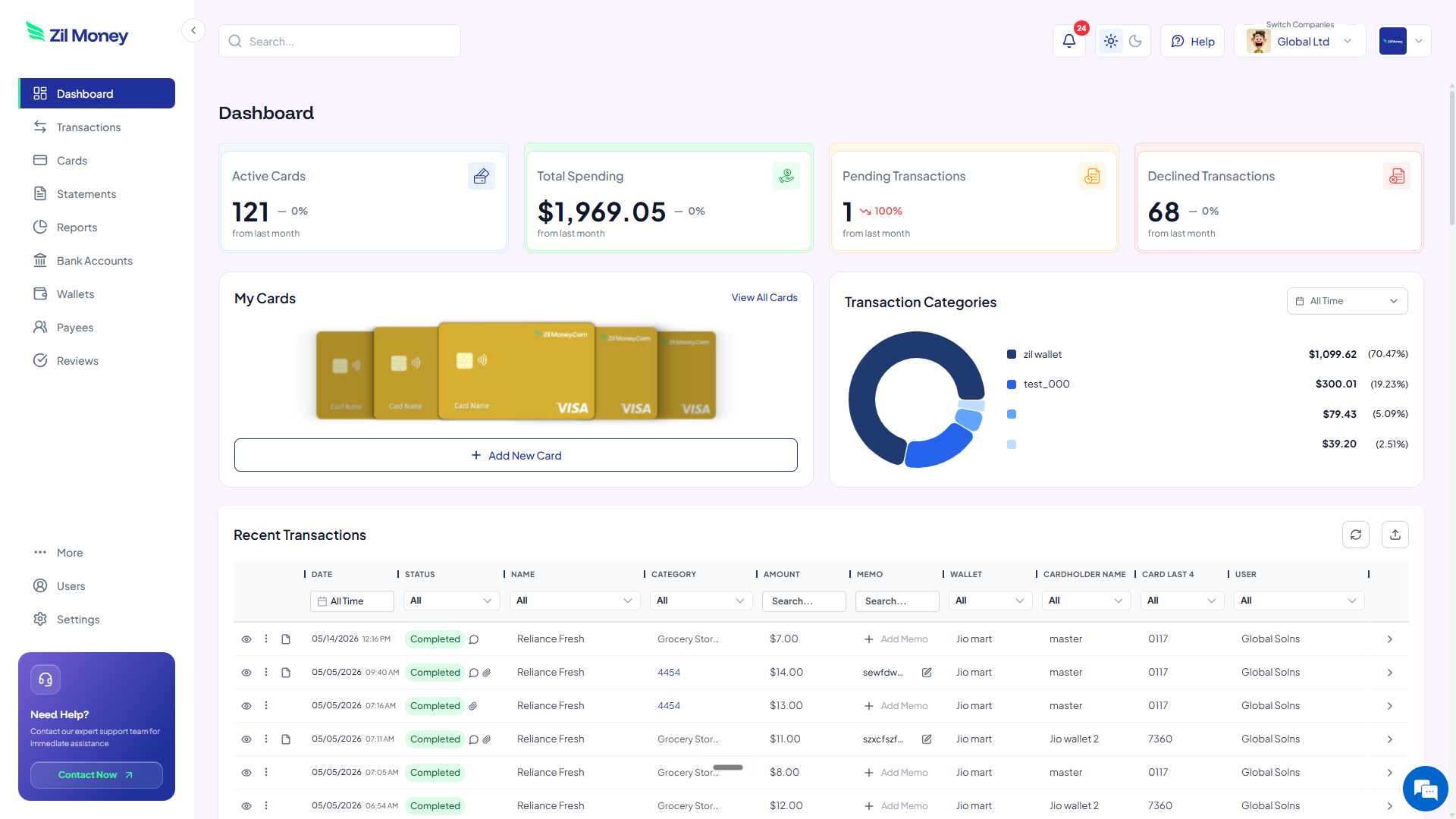
Live dashboard
Active cards, spend by supplier and ad account, declined attempts, every charge as it happens.
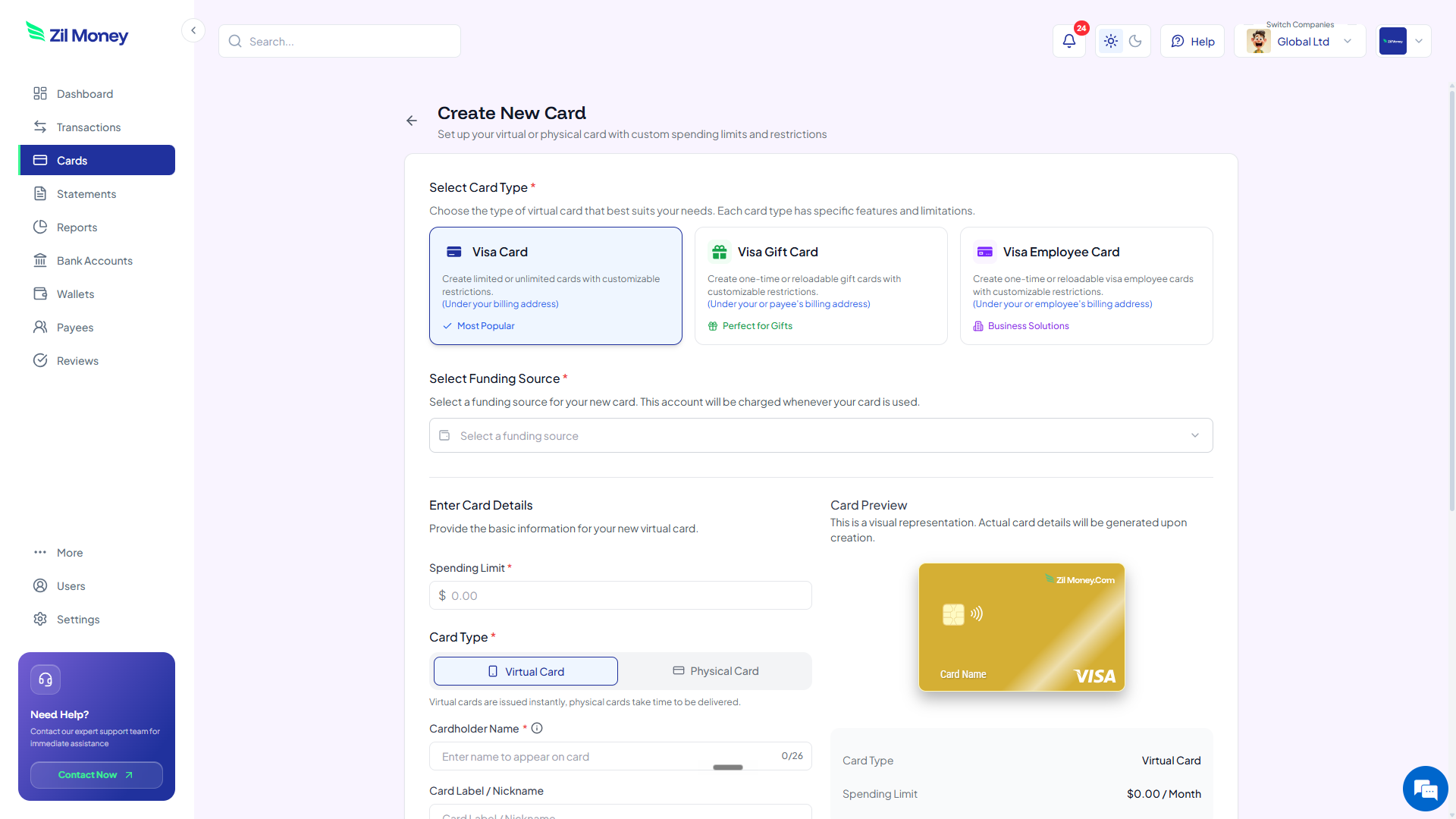
Issue a supplier card
Pick the card type, set the limit near the order, choose virtual or physical, pay at checkout.
What you can set on every supplier or ad card.
ControlWhat you setWhy it matters
Spend limit
Per-order or monthly capA charge above your cap can be blocked based on your controls.
Store categories
Allowed types, where supportedCard is restricted to the intended merchant based on supported controls.
Time window
Start and end datesA trial supplier card stops on its own.
Cardholder name
Supplier or ad account nameCharges roll up per supplier, so margins are easy to read.
One-time or reusable
ToggleA single trial order or an ongoing supplier relationship.
Three ways online stores use virtual cards.
- New supplier / trial order
Place a first order behind a tightly capped card. If the supplier disappoints, you cancel that card rather than your whole account.
- Dropshipping / a card per supplier
Pay a different supplier for almost every order, each behind its own card with a limit that matches the order. Each relationship stays boxed off.
- Ad account / monthly budget
Cap each platform at its monthly budget so a runaway campaign is stopped at the limit rather than discovered on the statement.
One honest caveat: a virtual card works at most merchants where Visa is accepted online, and in person through a mobile wallet where available, but acceptance still depends on the supplier and the network. Some marketplaces or processors may not take a given card, so keep a backup payment method for those. For what records to keep and for how long, see the IRS guidance on recordkeeping for businesses.
Common questions.
Are virtual cards good for e-commerce and dropshipping?
Yes. They let an online seller give each supplier and ad account its own capped card, protect the main account if a supplier is breached, and keep cost of goods easy to reconcile, all from one dashboard.
How do online sellers pay suppliers with virtual cards?
Create a card per supplier, set its limit near the order amount, and pay at the supplier's online checkout. The charge appears in your dashboard with a receipt, and a charge above your cap can be blocked based on your controls.
Can I use a virtual card for new or overseas suppliers?
Yes. A virtual card works at most merchants where Visa is accepted online, and in person through a mobile wallet where available, subject to merchant support and network conditions. Set a tight limit for a trial order with a new supplier, then raise it once you trust them.
How do virtual cards protect an online store's account?
Each supplier holds only its own card number, capped to a limit. If one supplier is breached or overcharges, you cancel that single card and every other supplier and ad account keeps working.
Do virtual cards help with cost of goods accounting?
They do. Each charge carries a receipt and a category, so you can see what each product line costs to source and promote, and export a statement for any period for your bookkeeper.
Can I cap an ad account with a virtual card?
Yes. Set each ad platform's card to its budget, and a charge above the cap can be blocked based on your controls, so a runaway campaign cannot drain your store's account.
Related setups.
- Industries
Virtual cards for field service businesses
Run HVAC, plumbing, or electrical and tired of techs fronting cash, sharing one company card, and chasing receipts? A virtual card for a field service business is a prepaid Visa ca
5 min read - Industries
Virtual cards for insurance agencies
Stop sending field adjusters out to front fuel and hotels and wait months to be made whole. Issue a capped virtual Visa card per adjuster or per claim, named for the claim number,
5 min read - Industries
Virtual cards for agencies
When your agency runs ten clients' ad budgets on one card, every month-end is a guessing game. A card per client budget caps each one, keeps client spend separate, and makes rebill
5 min read
Issue the first one this afternoon.
E-commerce take about a minute each: pick the type, set the limit, add the restrictions, send it.