
Virtual cards for agencies
When your agency runs ten clients' ad budgets on one card, every month-end is a guessing game. A card per client budget caps each one, keeps client spend separate, and makes rebilling clean.










Ten clients' budgets on one agency card is a guessing game every month-end.
An agency runs other people’s money. You buy ads, tools, and stock on a client’s behalf, then rebill it, and the record has to be clean enough to defend on an invoice.
- One card behind every client. Which of these charges belonged to which client, and at what budget, is a question you answer from memory.
- Budgets drift into each other. Nothing stops one client’s ad account from quietly outspending its media budget on shared funds.
- Rebilling is a reconstruction. The invoice is half the job, and building it means untangling a single statement line by line.
- A campaign that ends keeps billing. Nothing is scoped to the engagement, so a tool or platform runs on past the last day of it.
- Freelance costs land in the wrong place. Designers, editors, developers, and writers are paid off the same number, so their costs do not map to a client.
A card per client budget. A cap on each one. Cancel it when the work ends.
Create one card per client, or one per campaign, and name it for the account. Set its limit to the retainer or the media budget you agreed.
- A card per client or per campaign. Spend is contained by design, and one client’s problem never touches another’s funds.
- Capped to the agreed budget. A charge above the cap can be blocked based on your controls. Ad platforms can still bill for spend already in flight, so leave a little headroom.
- Locked to the intended platform. Restrict a card to where it is meant to be used based on supported controls, so a leaked number is hard to reuse.
- Shared tools on their own card. The agency stack stays separate from client media rather than mixed into it.
- Clean rebilling. Every charge is already grouped to the account it belongs to, so the line items on your invoice match the card. Our guide to tracking billable client expenses goes deeper.
- Pause or cancel per client. When an engagement ends you cancel that one card and nothing else is affected. It is virtual cards for business payments run across many clients at once.
Four steps from a signed retainer to a capped budget.
- 01
Make a card.
Name the card for the client or the campaign and set the limit to the retainer or media budget.
- 02
Set the rules.
Pick the allowed platform categories where supported and set the start and end dates to the engagement.
- 03
Hand it to the account lead.
The card is emailed to the cardholder or added to Apple Wallet or Google Wallet.
- 04
Rebill and close.
Export a statement for that client and period, attach it to the invoice, then cancel the card when the campaign ends.
Every client budget in one dashboard.
Watch each charge land against the client it belongs to. Issue, freeze, top up, or close any card from the same screen. For the media side specifically, see our guide to controlling ad spend.
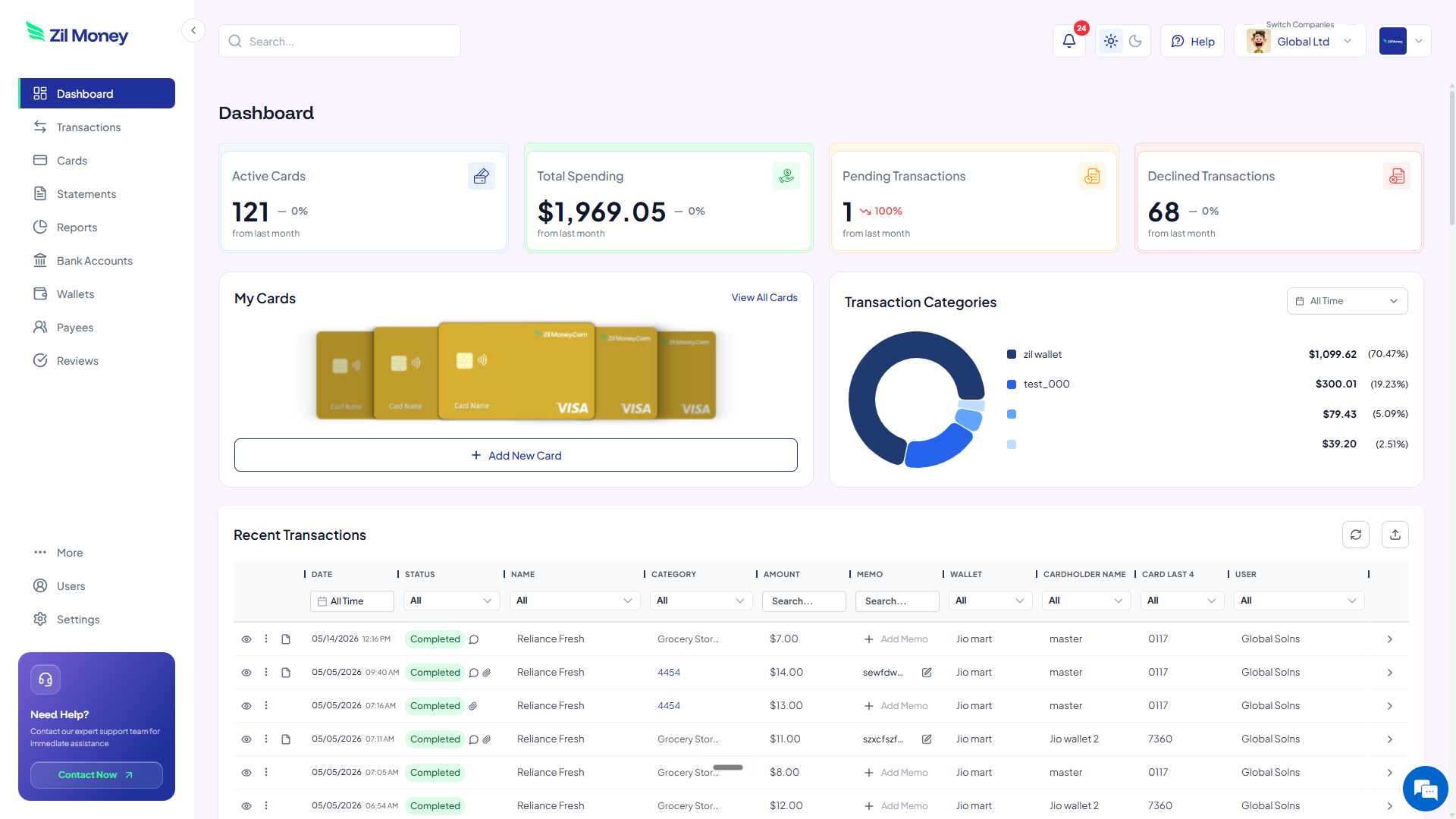
Live dashboard
Active cards, spend by client, declined attempts, every charge as it happens.
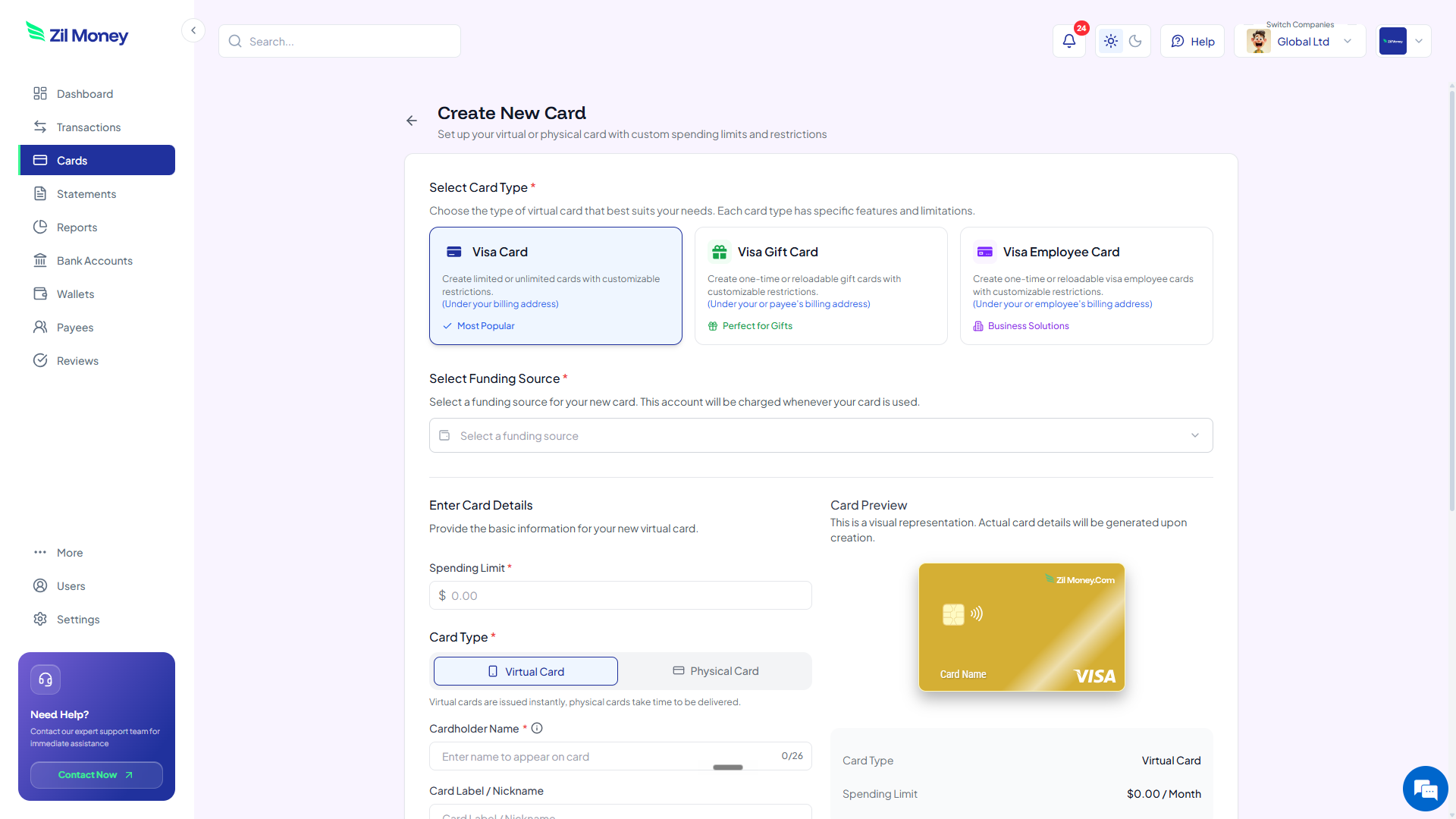
Issue a client budget card
Pick the card type, set the media budget, choose virtual or physical, hand it to the account lead.
What you can set on every client card.
ControlWhat you setWhy it matters
Spend limit
Monthly or total capThe card holds the agreed retainer or media budget.
Store categories
Allowed types, where supportedCard is restricted to the intended platform based on supported controls.
Time window
Start and end datesCard matches the campaign and stops when it ends.
Cardholder name
Client or campaign nameCharges roll up per account, ready to rebill.
One-time or reusable
ToggleA single media buy or an ongoing retainer.
Three ways agencies use virtual cards.
- Per-client media card / monthly
Open a $12,000 monthly card for one client’s paid social. It is capped at the agreed media budget and named for the account, so the invoice writes itself.
- Campaign card / fixed window
Spin up a card for a six-week product launch with an end date. When the campaign closes the card stops, so nothing keeps billing.
- Freelancer card / per project
Give a contract editor a card scoped to one client’s project so their cost lands against the right account. For the reporting threshold, see the IRS guidance on Form 1099-NEC.
As an agency grows it adds clients, sub-teams, and sometimes separate entities. Create as many cards as you need under one login, and manage more than one company with a parent-and-subsidiary structure. The system you start with for three clients still fits at thirty.
Common questions.
Are virtual cards good for agencies?
Yes. They let an agency give each client budget its own capped card, keep client funds separate, and rebill cleanly because every charge is already grouped to the right account, all from one dashboard.
How do agencies manage client ad budgets with virtual cards?
Create one card per client or campaign and set its limit to the agreed media budget. A charge above the cap can be blocked based on your controls, so an ad account is far less likely to quietly outspend its budget. Leave a little headroom, since platforms can bill for spend already in flight.
Can an agency keep client funds separate?
Yes. Each client runs on its own card, so spend is contained by design and one client's charges never mix with another's. You can cancel a single client card when an engagement ends without affecting the rest.
How do virtual cards help agencies rebill clients?
Every charge is grouped to the client's card with a receipt attached, and you export a statement for any client and period. The invoice line items match the card, so clients see exactly what their budget bought.
Can agencies pay freelancers with virtual cards?
Yes. Give each project or contractor its own card so costs land against the right client, and keep the pay separated so year-end 1099 totals are easy to pull.
Where can agency virtual cards be used?
They work at most merchants where Visa is accepted online, and in person through a mobile wallet where available, subject to merchant support and network conditions, which covers the ad platforms, tools, and services agencies pay for by card.
Related setups.
- Industries
Virtual cards for insurance agencies
Stop sending field adjusters out to front fuel and hotels and wait months to be made whole. Issue a capped virtual Visa card per adjuster or per claim, named for the claim number,
5 min read - Industries
Virtual cards for travel agencies: pay suppliers per booking.
Stop fronting cash on one shared agency card and untangling the statement at month-end. Issue a wallet-funded virtual Visa for each booking, capped to the supplier's net rate and l
5 min read - Industries
Virtual cards for staffing agencies, one card per placement.
Staffing agencies carry the cost of reimbursing placed workers for job-related expenses, including uniforms, tools, and travel to the client site, while the billing cycle lags by w
4 min read
Issue the first one this afternoon.
Agencies take about a minute each: pick the type, set the limit, add the restrictions, send it.