
Payroll cards for employees
Pay employees and contractors on a reloadable Visa card. Load wages each pay cycle with no bank account required from the recipient, then reload the same card next time.









thru11/30
Not everyone you pay has a bank account.
Paper checks get lost and direct deposit needs a bank account the worker may not have.
- Unbanked workers wait. A worker without a bank account cannot take direct deposit and waits on a paper check to clear.
- Collecting bank details is slow. Chasing routing and account numbers from a large group delays every pay run.
- Checks cost time and money. Printing, mailing, and reissuing lost checks adds work to every cycle.
Pay them on a reloadable card instead.
A payroll card is a reloadable Visa card you fund each pay cycle. The worker spends from it wherever Visa is accepted.
- No recipient bank account. The worker does not need a bank account to be paid. They receive a card they can use once it's funded.
- Reload each cycle. Keep an active card across pay cycles, with funds loaded each pay period.
- Pay a group at once. Issue cards to a group from one upload, instead of collecting bank details one by one.
- Spend anywhere Visa works. Workers use the card wherever Visa is accepted, in store or online, and add it to a mobile wallet where available.
How to pay workers on a payroll card.
- 01
Fund the wallet.
Add the payroll amount to your wallet by ACH or wire.
- 02
Issue the cards.
Create a card for each worker, or issue to a group from one upload.
- 03
Load wages.
Set each card's amount for the pay period. The worker can spend as soon as the card is funded.
- 04
Reload next cycle.
At the next pay run, load the same cards again. No new card needed.
Every worker's pay, on one screen.
See each card's balance and spend. Load, reload, or cancel any card from the same dashboard.
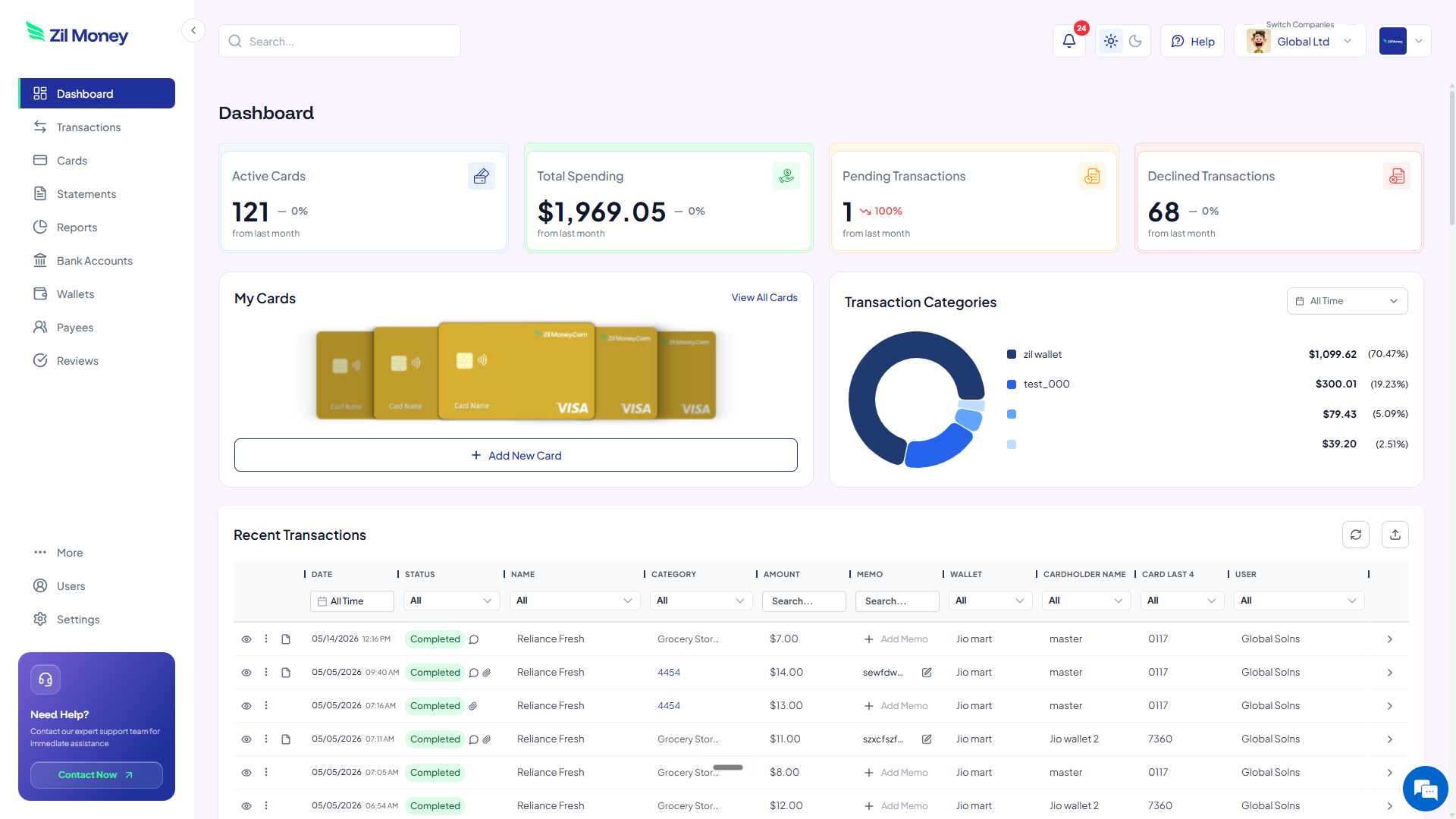
Live dashboard
Each worker's card balance, recent spend, and a full transaction log per card.
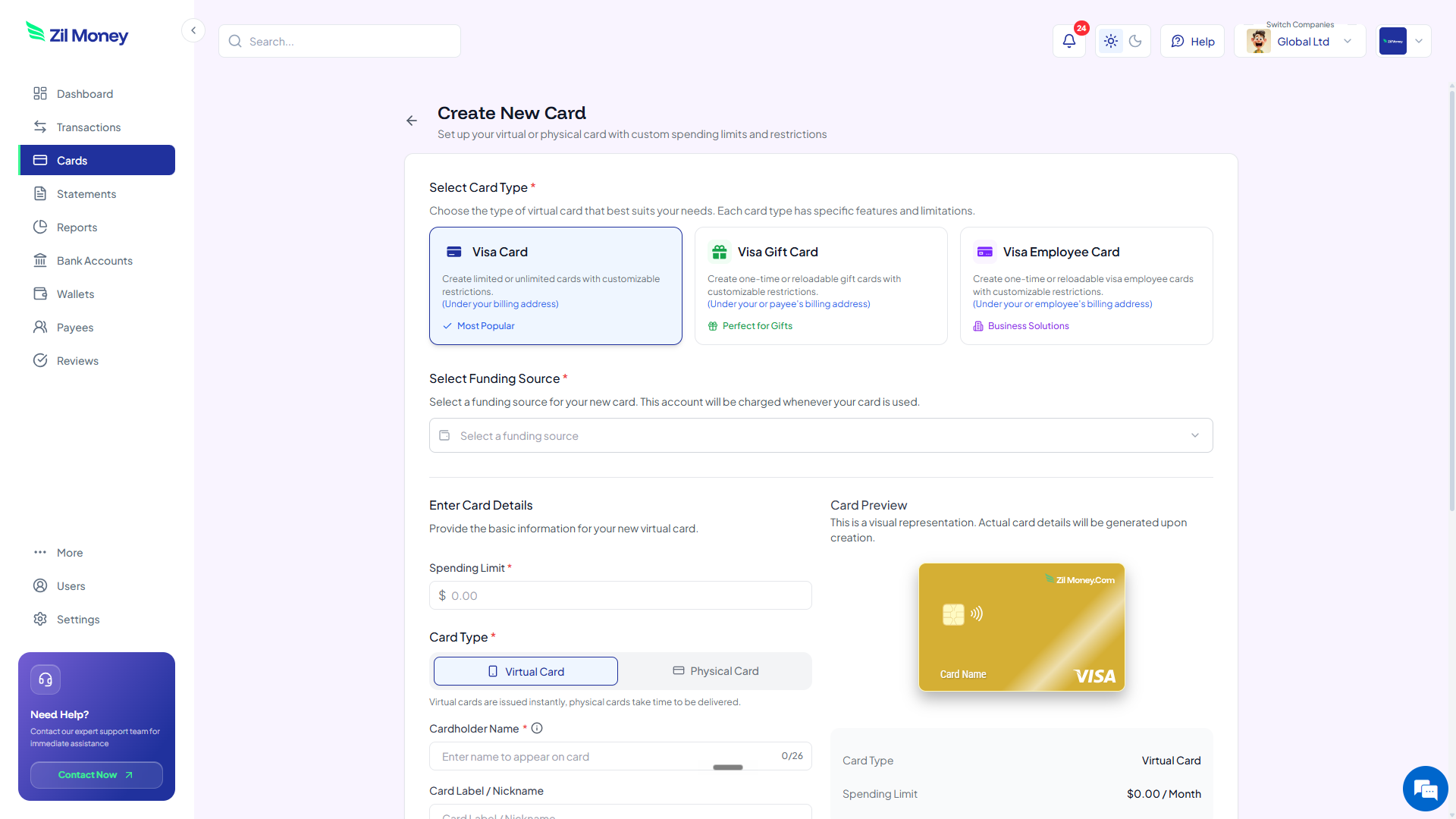
Issue payroll cards in a few clicks
Create reloadable cards, load the pay-period amount, and send each worker their card.
What you can set on a payroll card.
ControlWhat you setWhy it matters
Load amount
Per pay periodSet each worker's wages for the cycle.
Reloadable
Across cyclesKeep an active card and load funds again each pay period.
Cardholder name
Up to 26 charactersThe worker's name on the card.
Virtual or physical
Card formatIssue a virtual card once funded, or ship a physical card by USPS (5-7 business days).
Cancel
AnytimeCancel a card when a worker stops being paid.
Three ways businesses use payroll cards.
- Day labor
After a worker chooses the card as their payment method, load the day's pay onto it. They spend it the same way as cash.
- Seasonal crew
Issue reloadable cards to a seasonal team and load wages each week, without collecting bank details from everyone.
- Contractor pay
Pay a contractor without a bank account on a card, and reload it for the next milestone.
Common questions.
What is a payroll card?
It is a reloadable Visa card you fund each pay cycle to pay an employee or contractor. The worker spends from it wherever Visa is accepted and does not need their own bank account.
Does the employee need a bank account?
No. A bank account is not required from the recipient. They receive a card and can use it as soon as it is funded.
Can I reload the same card each pay period?
Yes. The card is reloadable. You keep an active card across pay cycles and load funds again each pay period.
Is using a payroll card mandatory for workers?
No. Most state wage-payment laws require employers to offer at least one no-cost alternative method of receiving wages, such as direct deposit or paper check, and federal Regulation E bars requiring an employee to receive wages through a specific institution. Payroll cards must be voluntary for employees. Requirements vary by state, including consent and notice rules, so confirm your state's wage-payment statute before enrolling employees. Virtual Card Maker provides the card tooling. The employer is responsible for classifying workers correctly and offering compliant alternatives. Contractor payments are not wages and are not subject to these employee wage-payment rules.
Can I pay a whole team at once?
Yes. Issue cards to a group from one upload and load each card's amount for the pay period, instead of collecting bank details one by one.
Are there fees the recipient should know about?
Card fee schedules are disclosed to recipients at enrollment, before the first wage transfer to the card, as required by federal and state law. Specific fee amounts vary. Please review the cardholder agreement provided at issuance.
How is the money on the card protected?
Funds loaded onto payroll cards are held at our partner bank, which is Member FDIC. FDIC insurance applies to eligible balances at the partner bank, subject to applicable limits and requirements.
Is this a substitute for full-service payroll?
No. Payroll cards are a disbursement method, not a full payroll system. They do not calculate taxes, file payroll tax forms, or generate pay stubs on their own. Use them alongside your existing payroll provider or for 1099 contractors.
Related setups.
- Card types
Expense Cards for Employees: Per-Card Controls That Actually Work
Stop chasing receipts. Issue expense cards for employees with individual spend limits, merchant controls, and dashboard-level visibility over every dollar.
9 min read - Card types
Virtual gift cards for your employees
A practical guide to virtual gift cards for employees: which occasions call for one, how to set the budget, virtual versus physical delivery, redemption tracking, and the W-2 reporting step most guides skip.
8 min read - Card types
Visa virtual card
Give each vendor, subscription, and employee their own Visa card instead of sharing yours. Put a limit on each one, keep it to a single merchant, and see exactly where every dollar
5 min read
Issue the first one this afternoon.
Payroll cards for employees take about a minute each: pick the type, set the limit, add the restrictions, send it.